When evaluating a hot oil hose, temperature rating should be the first thing to check, but it should never be understood as just a single number. The real temperature capacity of a hose depends on several factors working together, including the type of medium being transferred, the hose construction, the operating pressure, and whether the hose is used for hot oil or high-temperature compressed air. In other words, a hose that performs well in one high-temperature application may not be the right choice for another. This is why understanding the temperature range is essential before making a selection. For example, the K201 Hot Oil Hose is rated for a working temperature range of -40°C to +150°C, making temperature performance a key starting point when assessing whether it is suitable for demanding hot oil and hot air service.
1.Quick Answer: What Temperature Can a Hot Oil Hose Handle?
Typical Maximum Temperature Range
Many hot oil hoses are rated to handle temperatures up to 150°C / 302°F, which is a common benchmark for high-temperature oil transfer applications. The K201 Hot Oil Hose is rated for a working temperature range of -40°C to +150°C, and comparable high-temperature hot oil hoses on the market, such as certain Gates products, also list -40°C to +150°C for general service.
Why the Maximum Rating Is Not the Whole Answer
However, that maximum figure should not be treated as a universal guarantee under all operating conditions. The actual safe working temperature of a hose depends on several factors, including the type of medium being conveyed, the system pressure, the hose construction, and whether the hose is being used for hot oil or high-temperature compressed air. For this reason, 150°C / 302°F should be understood as a useful reference point rather than the only criterion for hose selection.
2.Why Hot Oil and Hot Air Are Not the Same
Different Media, Different Temperature Limits
Hot oil service and hot air service should not be treated as identical, even when the same hose is described as suitable for both applications. In practice, the safe operating temperature can change depending on the medium being transferred. The K201 Hot Oil Hose is described as being used for the transportation of petroleum-based lubricants and compressed air with very high temperature, with a listed working temperature range of -40°C to +150°C. A comparable Gates high-temperature hot oil hose also lists a general temperature range of -40°C to +150°C, but separately states that Air Only service is limited to -40°C to +121°C / -40°F to +250°F. This shows that even when a hose can handle both hot oil and hot air, the allowable temperature may not be the same for each medium.
Why This Matters in Hose Selection
This difference matters because buyers and engineers may assume that one maximum temperature rating applies to every high-temperature application, which is not always correct. A hose selected for hot oil transfer may perform differently when used for hot compressed air, so the specification should always be checked against the actual service conditions. For a product like K201, the better approach is not simply to say that it is a “150°C hose,” but to understand that its performance must be evaluated in relation to the specific medium, the system design, and the intended use.
 3.What Determines the Real Safe Temperature?
Fluid Type
The first factor is the fluid itself. A hot oil hose must be matched to the actual medium in the system, because temperature performance can vary depending on what is being transferred. The K201 Hot Oil Hose is described as being specially used for the transportation of petroleum-based lubricants and compressed air with very high temperature, which means its temperature suitability should be understood in relation to those specific applications rather than assumed to apply to every fluid. Comparable high-temperature hose lines may also list separate temperature limits for specialty fluids, which further shows that fluid compatibility is a key part of safe hose selection.
Hose Construction
The second factor is hose construction. The K201 page lists a high temperature resistant synthetic rubber inner tube, wire braid reinforcement, and a synthetic rubber outer cover. These structural elements are not just technical details. They directly influence how well the hose performs under heat, how stable it remains under pressure, and how long it can maintain reliable service in demanding operating conditions. In other words, the real safe temperature of a hose depends not only on the stated rating, but also on the materials and reinforcement built into the hose itself.
Pressure at High Temperature
Temperature and pressure should always be evaluated together. A hose is never selected by temperature alone, because heat and pressure act on the hose at the same time during operation. The K201 specification table shows multiple sizes with different working pressure and burst pressure values, which makes it clear that the correct hose must match both the required temperature range and the actual pressure conditions of the system. A hose that is acceptable in one thermal condition may not be the right choice if the pressure load changes.
Continuous vs. Intermittent Exposure
Another important factor is how long the hose remains under elevated temperature. A hose that can tolerate a peak temperature is not automatically the best option for continuous operation at that same level. In practical applications, buyers should consider whether the hose is exposed to sustained heat or only short-term temperature peaks. This is especially relevant in compressor lines and hot oil return systems, where the service medium and duty cycle can affect the real operating limit. For example, Gates lists a general temperature range of -40°C to +150°C for its comparable high-temperature hot oil hose, but gives a separate Air Only rating of -40°C to +121°C, showing that the operating condition can change the safe limit even within the same product family.
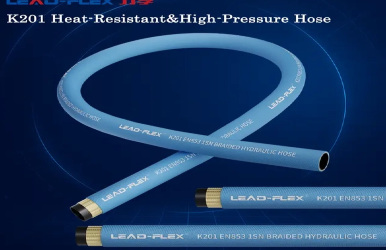
4.Product Example: K201 Hot Oil Hose
A Practical Example for High-Temperature Service
The K201 Hot Oil Hose provides a useful example of how a hot oil hose is designed for real high-temperature applications. According to the product page, it is intended for the transportation of petroleum-based lubricants and compressed air with very high temperature, which makes it suitable for systems that require both heat resistance and reliable pressure performance. The page also notes that K201 is widely used not only on construction machinery, but also on air compressors for transferring hot air. Its listed working temperature range is -40°C to +150°C, making it a clear reference point when discussing what temperature a hot oil hose can handle in practical service.
What This Example Shows
This product example shows that the temperature rating of a hot oil hose should always be understood together with its intended medium and application. In the case of K201, the published specification is supported by a structure that includes a high temperature resistant synthetic rubber inner tube, wire braid reinforcement, and a synthetic rubber cover, all of which contribute to its ability to perform in demanding thermal conditions. Rather than viewing the hose simply as a generic oil hose, it is more accurate to understand K201 as a hose designed for high-temperature lubricant transfer and hot-air service within a defined operating range.
5.How to Choose the Right Hot Oil Hose for High-Temperature Service
Confirm the Actual Medium
The first step is to confirm what the hose will carry. A hot oil hose should be selected according to the actual service medium, not by name alone. The K201 Hot Oil Hose is designed for petroleum-based lubricants and compressed air with very high temperature, so it should be matched to those specific applications.
Verify the Maximum Operating Temperature
Next, check the system temperature against the hose rating. The K201 page lists a working temperature range of -40°C to +150°C. However, the maximum rating should not be applied blindly, because some comparable products list different limits for different media, especially for air-only service.
Check Pressure Requirements
Temperature is only part of the selection process. The hose must also meet the pressure demands of the system. The K201 specification table shows different working pressure and burst pressure values across sizes, so both heat and pressure must be considered together.
Match the Hose Size and Fittings
The correct hose size should match the required flow, connection dimensions, and system layout. Fittings should also be compatible with the hose and operating conditions, because safe performance depends on the complete hose assembly, not the hose alone.
Check What the Hose Is Not Designed For
It is also important to confirm where the hose should not be used. Some comparable high-temperature hot oil hoses are not recommended for gasoline or diesel fuel applications, which shows that proper selection includes understanding both the intended use and the limits of the product.
FAQ
1. Can all hot oil hoses handle 150°C?
No. Many hot oil hoses are rated up to 150°C, but the actual limit depends on the hose design, medium, and operating conditions. K201 lists -40°C to +150°C, but not every hose has the same rating.
2. Can a hot oil hose be used for hot air or compressed air?
Sometimes yes. K201 is described as suitable for compressed air with very high temperature, but comparable products may list a lower limit for air-only service than for hot oil service.
3. Can I use a hot oil hose for gasoline or diesel?
Not necessarily. Some high-temperature hot oil hoses are specifically marked as not recommended for gasoline or diesel fuel applications, so the specification must be checked before use.
4. What is the most important factor when selecting a hot oil hose?
The most important factor is matching the hose to the actual medium and temperature, then checking pressure, construction, and size. A temperature number alone is not enough.
Conclusion
In conclusion, many hot oil hoses can handle temperatures up to 150°C / 302°F, but the true safe operating limit depends on more than the maximum temperature rating alone. The actual performance of a hose is influenced by the type of medium being transferred, the system pressure, the hose construction, and whether the application involves hot oil or high-temperature compressed air. For this reason, the best way to describe a product like K201 is not simply to say that it works “up to 150°C,” but to explain that it is designed for high-temperature petroleum-based lubricants and hot-air service within its specified operating range.


