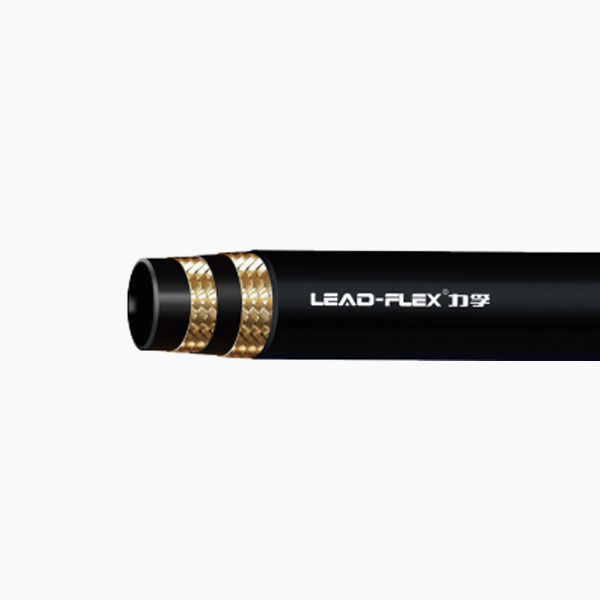
Replacing a compromised hydraulic line demands far more than merely matching the original length. It requires precise dimensional validation to prevent severe operational failures. Using the wrong diameter leads to erratic fluid turbulence, rapid overheating, or catastrophic fitting blow-offs during operation. When equipment operators attempt to measure a failed hose, they routinely confuse the outer diameter (OD) for the inner diameter (ID). This common mistake instantly compromises machine safety and hydraulic efficiency. Our goal is to provide maintenance engineers and procurement teams a clear, actionable framework for evaluating these critical dimensions. You will learn exactly how to balance ID and OD requirements properly. We also reveal how to ensure safe, compliant, and highly efficient replacement of any compact fluid power assembly.
Key Takeaways
ID Dictates Flow: The Inner Diameter is non-negotiable; it determines fluid velocity and system efficiency. Undersizing causes heat buildup and pressure drops.
OD Dictates Fitment: The Outer Diameter matters most for routing through tight machinery envelopes and determining exact fitting compatibility (especially for skived vs. non-skive configurations).
Compact Hoses Require Tighter Tolerances: A compact hydraulic hose relies on a specifically engineered OD to achieve a tighter bend radius without compromising the ID's flow capacity.
Fittings Bridge the Gap: A mismatch between hose OD/ID and the coupling dimensions is the leading cause of field failures.
The Operational Risks of Getting Sizing Wrong
Inaccurate hose measurement triggers severe business and safety consequences. Replacing a failed component using guesswork severely jeopardizes heavy machinery operations. Equipment downtime escalates rapidly when a new assembly bursts or leaks on the first day. Maintenance teams must treat dimensional validation as a strict safety protocol rather than a casual visual check.
Restricting fluid flow presents an immediate danger. When you install an undersized inner diameter (ID), you force the same fluid volume through a narrower passage. This restriction artificially increases fluid velocity past safe operational thresholds. High fluid velocity generates excessive internal friction against the tube walls. Friction breeds immense heat buildup inside the hydraulic system. Overheating breaks down fluid viscosity, degrades rubber seals, and causes eventual system degradation. Actuators will slow down, and hydraulic pumps will overwork themselves into premature failure.
Conversely, an oversized outer diameter (OD) creates severe routing failures. Modern heavy machinery features incredibly dense engine compartments. Forcing an overly thick hose into a tight retaining bracket causes constant physical stress. The external rubber cover rubs aggressively against metal bulkheads during normal vibration. This relentless abrasion accelerates cover wear. Soon, the underlying wire reinforcement becomes exposed to moisture and dirt. Corrosion sets in, weakening the pressure-holding layer and creating a high blowout risk.
To achieve a successful replacement, you must aim for original equipment manufacturer (OEM) performance. Proper sizing maintains baseline operating pressure and optimal flow rate. It also guarantees adequate routing clearance. You should never need to retrofit clamps or modify brackets to make a replacement part fit your machine.
Inner Diameter (ID): The Critical Metric for Fluid Dynamics
Engineers prioritize inner diameter because it directly controls fluid dynamic performance. The ID represents the hollow center space where hydraulic fluid actually travels. This dimension dictates the volume of oil your system can move per minute. It serves as the primary sizing metric for mechanical efficiency and component health.
Flow rate (measured in gallons per minute), fluid velocity, and ID share a rigid mathematical relationship. If you keep the flow rate constant but shrink the ID, velocity spikes dramatically. Industry professionals rely on a standard hydraulic Nomogram to calculate these variables accurately. A Nomogram acts as a reliable visual alignment chart. You draw a straight line connecting your system's target flow rate and the maximum recommended fluid velocity. Where this line intersects the middle column reveals the exact ID needed to prevent system bottlenecks.
Hydraulic manufacturers communicate ID using standard "dash sizes." This universal shorthand simplifies procurement across different brands globally. A dash size simply represents the hose ID in sixteenths of an inch. Understanding this terminology prevents purchasing errors.
Standard Dash Size Conversion Chart
Dash Size
Fractional ID (Inches)
Decimal ID (Inches)
Millimeter Equivalent (mm)
-4
1/4"
0.25"
6.4 mm
-6
3/8"
0.375"
9.5 mm
-8
1/2"
0.50"
12.7 mm
-10
5/8"
0.625"
15.9 mm
-12
3/4"
0.75"
19.0 mm
-16
1"
1.00"
25.4 mm
Implementation risks run high when operators try to cheat these dimensions. Never size down just to save money or fit a tighter envelope. Sizing down intentionally creates a massive pressure drop across the entire fluid system. This pressure drop robs your equipment of mechanical power. Cylinder actuation becomes sluggish, lifting capacities drop, and overall efficiency plummets drastically.
Outer Diameter (OD): The Deciding Factor for Compact Routing
While ID manages internal fluid power, OD dictates physical installation realities. Space constraints in modern equipment make routing incredibly challenging. The OD determines whether an assembly will smoothly navigate tight corridors or jam against hot engine blocks.
Several physical layers determine the final outer diameter. The core is the inner tube thickness. Next comes the metal wire reinforcement layer. Finally, the protective outer rubber cover adds the last bit of bulk. Standard designs often use thick, bulky rubber to achieve high pressure ratings.
This bulky reality gave rise to specialized compact solutions. A compact hydraulic hose achieves the exact same ID and pressure rating as a traditional standard line. However, it utilizes high-tensile steel wire braids and advanced, thinner cover materials. These sophisticated engineering upgrades significantly reduce the overall OD. They eliminate unnecessary bulk without compromising structural safety or burst thresholds.
A smaller OD directly correlates to a much tighter minimum bend radius. Every hose has a physical limit to how sharply it can bend before the inner tube kinks. Kinking immediately chokes fluid flow and permanently damages the wire reinforcement. A compact profile allows engineers to route lines through complex, limited-space equipment easily. You can execute sharper turns around chassis components safely. This prevents kinking, reduces the total length of hose needed, and streamlines the entire assembly profile.
Navigating Fitting Compatibility: Where ID and OD Intersect
The physical intersection between flexible rubber lines and rigid metal fittings demands mechanical perfection. Fitting compatibility represents the most critical safety checkpoint during replacement. Even minor dimensional mismatches here will cause catastrophic fluid leaks.
Internal fit focuses on the coupling's stem inserting into the hose. The hose ID must precisely match the fitting stem's diameter. It must slide in snugly to seal correctly. If the stem fits loosely, high pressure fluid will bypass the internal seal. If it fits too tightly, you risk gouging the inner tube during insertion. Neither scenario is acceptable for safe operations.
External grip relies heavily on accurate OD measurements. The metal ferrule (or collar) must grip the outer rubber perfectly during the crimping process. When evaluating a high pressure steel wire braided hose, you must know its exact OD profile. Some specific OD profiles require skiving before assembly. Skiving involves shaving off a short section of the outer rubber cover. This allows the metal teeth to bite directly into the rigid wire reinforcement. Modern compact profiles often use no-skive fittings instead. No-skive ferrules feature sharp internal teeth. These teeth slice right through the thin cover to grip the wire without manual shaving. Using a standard ferrule on a compact line will result in an under-crimped, dangerous connection.
Field technicians often attempt risky workarounds for mismatched sizes. A common bad practice involves trying to mate a 5/8-inch line with 1/2-inch ends using step-down adapters. This bottlenecking strategy introduces massive fluid turbulence right at the connection point. As fluid crashes into the sudden restriction, pressure spikes occur immediately. This turbulence generates excessive heat localized at the fitting, accelerating premature seal degradation.
The STAMPED Sizing Framework for Hose Replacement
Replacing a fluid power line requires a systematic approach to avoid dangerous errors. Industry professionals use a standardized engineering checklist called the STAMPED framework. This rigorous method helps decision-stage buyers properly validate every required specification before placing an order.
Follow these critical steps during your evaluation process:
S (Size): Always validate both the inner and outer diameters carefully. You need the correct ID to maintain optimal fluid flow dynamics. You need the precise OD to guarantee correct routing and accurate fitting selection.
T (Temperature): Assess both internal fluid temperatures and external ambient heat. If you route lines near exhaust manifolds, you must account for extreme external heat spikes using specialized cover materials.
A (Application): Determine if the routing is dynamic (moving) or static (stationary). Dynamic applications require high flexibility and tight bend radiuses, commonly found in compact environments.
M (Materials): Ensure the inner tube material is chemically compatible with your specific hydraulic fluid. The outer cover must provide sufficient abrasion and ozone resistance for your environment.
P (Pressure): Ensure the replacement hydraulic hose meets or exceeds the system's maximum working pressure. It must also safely handle unexpected pressure spikes during heavy load shifts.
E (Ends): Verify your required coupling thread types, port orientation, and specific mechanical sealing methods (such as O-rings or metal-to-metal face seals).
D (Delivery): Mandate thorough pressure testing, interior flushing, and certification of the final crimped assembly before you install it on the machine.
By following the STAMPED checklist, you systematically eliminate costly guesswork. It ensures you order the exact right part for your specific machinery application every single time.
Conclusion
While matching the inner diameter guarantees baseline machine performance, precisely matching the outer diameter guarantees safe installation. Correct sizing ensures excellent fitting retention and prevents catastrophic blowouts. Balancing these two critical dimensions remains the ultimate key to a successful, long-lasting maintenance routine.
Start your replacement process by examining the existing failed assembly thoroughly. Locate the printed layline on the rubber cover to read the original OEM specifications. If the layline is illegible, utilize a precision digital caliper to capture accurate measurements yourself. Always measure a clean, uncrushed section of the line. Finally, consult with a certified supplier to build and pressure-test the proper assembly. Proactive measurement eliminates downtime and keeps your heavy equipment running smoothly.
FAQ
Q: How do I accurately measure the ID and OD of a failed hose?
A: Cut a clean, straight section away from the damaged area. Use a high-quality digital caliper to measure the exposed ends. Measure the inner hole for the ID and the total outer span for the OD. Never measure sections where the rubber is crushed, stretched, or severely warped, as this provides highly inaccurate data.
Q: Can I replace a standard hydraulic hose with a compact hydraulic hose?
A: Yes, this is usually an excellent structural upgrade. A compact design improves routing flexibility and reduces physical bulk. However, you must ensure the ID and pressure ratings exactly match your system requirements. You must also use specific compact-compatible fittings, as standard ferrules will not crimp properly onto a thinner cover.
Q: What happens if my new hose has the same ID but a larger OD?
A: A larger OD creates immediate physical installation problems. You will likely face severe abrasion as the thicker line rubs against machinery walls and engine components. Furthermore, you will lose the ability to reuse your existing protective routing channels and mounting clamps, forcing you to retrofit the equipment entirely.