+86-532-83028372 1425079515@qq.com
- All
- Product Name
- Product Keyword
- Product Model
- Product Summary
- Product Description
- Multi Field Search

Views: 0 Author: Site Editor Publish Time: 2026-06-02 Origin: Site


Industrial and commercial hot oil transfer presents a high-stakes operational reality. Catastrophic equipment failures often result in severe worker injuries, expensive facility downtime, and strict hygiene compliance violations. When exposed to high-temperature lipids or industrial thermal oils, standard PVC or general-purpose rubber hoses fail rapidly. They harden, become dangerously brittle, or undergo sudden thermal collapse under pressure. You simply cannot afford to rely on inadequate materials when handling 350°F fluids. Enter the K201 Hot Oil Hose. We introduce this purpose-built High Temperature Resistance Hose to meet your most stringent continuous-heat thresholds. It maintains flawless structural integrity while ensuring full regulatory compliance across demanding applications. You will learn how upgrading to engineered elastomers prevents system contamination, eliminates coupling blowouts, and streamlines your daily operational safety protocols.
Thermal & Pressure Tolerances: Engineered for continuous operation at 350°F (177°C) and rated for up to 300 PSI working pressure.
Structural Integrity: Features advanced wire-braid reinforcement to prevent thermal collapse, kinking, and fatigue in high-flex environments.
Regulatory Compliance: Manufactured with FDA-compliant, ARPM Class A oil-resistant elastomers to guarantee zero flavor transfer, low dissolution, and strict hygienic safety.
Ready-to-Deploy: Available in factory-tested, pre-assembled configurations to eliminate field-crimping risks and ensure out-of-the-box reliability.
Standard hoses simply cannot survive continuous hot oil exposure. Hot fluid actively leaches vital plasticizers from inferior rubber formulations. This aggressive degradation cycle causes rapid embrittlement of the inner tube. Minor surface cracks quickly escalate into inevitable, catastrophic fluid blowouts. You will notice traditional hoses turning stiff and unyielding after just a few weeks of use. This stiffness serves as your first warning sign of impending failure.
A 350°F oil splash creates immediate, severe physical dangers on the floor. Workers face permanent thermal burns and hazardous slip conditions when lines rupture. Commercial kitchens and large processing plants carry immense liability costs when these preventable accidents occur. Improper material specification directly threatens your workforce and damages your safety record. Managers must recognize hazardous fluid transfer as a primary safety vulnerability.
Material choice also dictates your ultimate food safety compliance. Non-compliant, degrading hoses taint edible oils during circulation. They introduce off-odors or leach harmful chemical compounds directly into your product flow. You risk massive product recalls, consumer complaints, and failed health inspections. We must treat sensory contamination as a critical operational threat. Customers easily detect chemical taints in fried foods.
Every hour of unexpected equipment downtime damages your profitability. A specialized K201 Hot Oil Hose prevents these sudden disruptions. You entirely avoid the exorbitant costs of hazardous spill clean-ups and lost production quotas. Upgrading your transfer lines represents a proactive defense against costly operational paralysis.
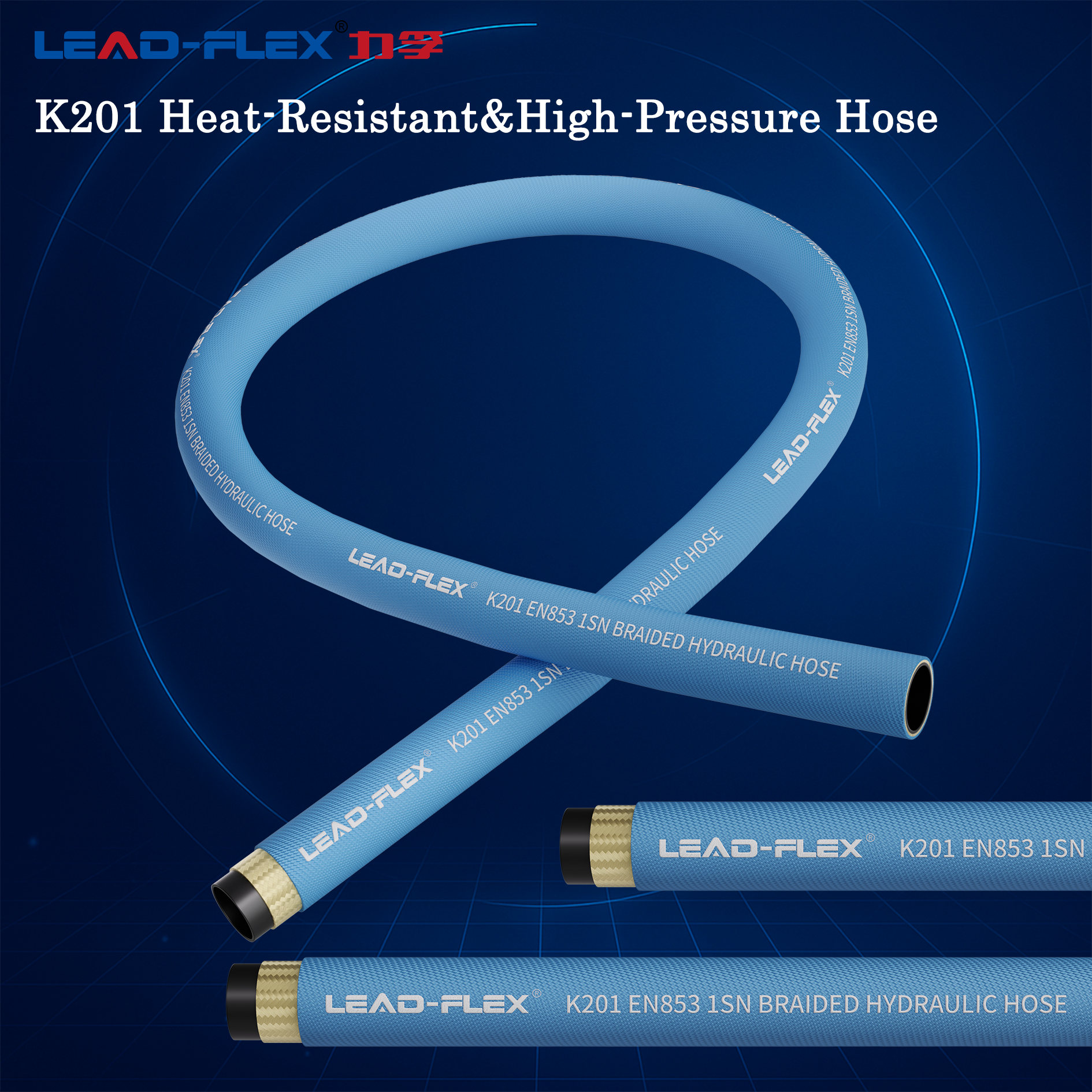
To evaluate a reliable hot oil transfer system, you must scrutinize its mechanical and thermal benchmarks. The engineered High Temperature Resistance Hose delivers exceptional performance under extreme stress. It handles 300 PSI safely at a continuous 350°F operation.
Continuous ratings matter significantly more than intermittent peak ratings. A brief peak rating offers zero protection during heavy 24/7 processing cycles. Intermittent hoses soften and fail when subjected to long-duration heating. Continuous thermal stability ensures genuine safety for your operators.
We utilize high-grade Nitrile (NBR) for the robust inner tube. Nitrile provides maximum chemical resistance against animal fats, aggressive vegetable oils, and industrial thermal fluids. The elastomer will not swell, degrade, or shed particles internally. This specialized rubber compound resists the permeation forces typical of hot lipids.
Internal wire braiding provides essential mechanical support for the assembly. High-tensile wire reinforcement prevents the hose from flattening under intense heat or deep vacuum conditions. Engineers call this dangerous flattening "thermal collapse." The rigid wire skeleton maintains perfect dimensional structure during constant flexing and routing. Fabric-reinforced alternatives simply collapse when they get too hot.
The exterior cover features a smooth, visually clean, non-marking design. Facilities often prefer pristine white covers for rigorous food-grade applications. A white surface allows floor operators to perform immediate visual inspections for grease buildup. Furthermore, the specialized cover compound actively resists ambient ozone degradation and harsh UV light exposure.
K201 High Temperature Resistance Hose Core Specifications | ||
Specification Feature | Engineered Parameter | Operational Benefit |
|---|---|---|
Continuous Temperature | 350°F (177°C) | Prevents softening during 24/7 cooking cycles |
Working Pressure | 300 PSI | Handles high-velocity pump surges safely |
Inner Tube Material | FDA-grade Nitrile (NBR) | Resists volume swelling and chemical leaching |
Reinforcement Structure | High-tensile steel wire braid | Eliminates kinking and vacuum thermal collapse |
Exterior Cover | Non-marking, ozone resistant | Allows easy washdowns and prevents surface cracking |
Basic oil resistance never satisfies the demands of commercial kitchens or strict industrial processing. We must look closely through the lens of recognized industry-standard evaluations. Passing basic tests does not guarantee long-term safety.
The Association for Rubber Products Manufacturers (ARPM) sets critical material benchmarks. An ARPM Class A rating guarantees the absolute highest level of volume swell resistance available. It serves as a non-negotiable baseline for any safe K201 Hot Oil Hose deployment. Class A materials maintain their physical dimensions even when soaked in aggressive lipids.
Food-grade assurances directly protect your end consumer. FDA compliance criteria demand rigorous chemical inertness from fluid transfer lines. Low dissolution properties ensure the hose material never impacts the sensory profile of your cooking oils. It perfectly preserves the exact taste, smell, and color of your edible product. You avoid imparting a distinct "rubbery" flavor to your fried goods.
Modern compliance standards also heavily dictate facility environmental safety. Premium hose assemblies remain entirely phthalate-free. They lack toxic plasticizers completely, ensuring safer fluid handling. This forward-thinking formulation aligns your facility with broader environmental regulations like REACH and RoHS. Responsible sourcing requires evaluating these hidden chemical profiles.
Installing a rigid, cumbersome pipe creates massive operational nightmares. The High Temperature Resistance Hose perfectly balances heavy-duty pressure ratings with everyday usability. It bends smoothly to accommodate real-world facility layouts.
Operators must frequently navigate through extremely confined spaces. Commercial fryers and dense industrial fluid manifolds offer very little working room. A tight bend radius proves absolutely essential here. Maintaining supreme flexibility down to a 6-inch radius allows seamless routing without dangerous kinking. Kinks restrict flow, build internal pressure, and accelerate localized blowouts.
Daily manual handling requires thoughtful ergonomic balance. A high-pressure hose must remain light enough for regular operator use. Heavy, unwieldy lines cause severe worker fatigue. They also increase the likelihood of accidental drops during hot fluid transfers. You protect your workforce by selecting flexible, manageable equipment.
Sometimes, complex routing paths expose the assembly to intense external radiant heat. Direct flame hazards or adjacent hot manifolds require supplemental thermal protection strategies. You should pair the hose with exterior defense mechanisms to prolong its life.
Silicone-Coated Fire Sleeves: Slide these over the assembly to deflect intermittent flame splashes and radiant oven heat.
Ceramic Fiber Shielding: Use this heavy-duty insulation if the line sits continuously near open combustion sources.
Stainless Steel Armor: Apply this external coil when the line constantly drags across abrasive concrete floors.
Spring Guards: Install these at the connection points to prevent severe bending stress near the metal fittings.
Smart procurement teams look far beyond the initial, surface-level purchase price. Buying a highly specialized K201 Hot Oil Hose mitigates immense long-term operational risks. Strategic buying focuses heavily on verified performance lifespans.
We strongly advocate for purchasing pre-assembled, factory-tested fluid lines. You can order standard 100-foot coils or custom-cut lengths equipped with permanently crimped sanitary fittings. Factory hydrostatic testing dramatically mitigates the severe risk of sudden coupling blow-offs. Field assembly often introduces unpredictable human error into high-pressure systems. Factory crimping provides guaranteed, uniform connection security.
You must size your process lines correctly to ensure optimal flow velocity. Internal diameters typically range from ½” to ¾” for fryer applications. Matching your exact pump flow rates prevents internal friction heating. Excess fluid friction accelerates internal elastomer wear prematurely. An undersized line works the pump too hard and degrades the rubber faster.
Compare the upfront component cost directly to your current replacement cycles. Cheaper, standard-duty alternatives require frequent replacement and intensive maintenance labor. They also carry unacceptably high risk profiles for injury. Investing in engineered, purpose-built quality simplifies your operational budgeting. You spend less time ordering replacements and cleaning up spills.
Your actionable next steps are very clear. Audit your current line lifespans on the factory floor today. Measure your exact length constraints and fitting thread requirements carefully. Request a verifiable specification sheet and a detailed assembly quote from your specialized engineering partner.
Treat high-temperature oil transfer as a serious engineering challenge requiring specific material tolerances, never a basic application for standard rubber pipes.
Select the K201 Hot Oil Hose for guaranteed worker safety, strict hygienic compliance, and stable continuous operations.
Audit your existing facility lines immediately for any visual signs of thermal degradation, stiffness, or outer cover hardening.
Contact our dedicated engineering sales team to request custom assembly quotes, run exact chemical compatibility checks, or acquire a sample line for evaluation.
A: The hose handles a strict continuous operating temperature of 350°F (177°C). Exceeding this continuous heat limit dramatically accelerates elastomer degradation and risks sudden thermal collapse. You must monitor your system heat accurately to guarantee maximum component lifespan and facility safety.
A: Yes. It strictly complies with FDA standards and achieves a premium ARPM Class A rating. Facilities safely use it in commercial fryers and edible oil recycling systems. The engineered inner tube completely prevents flavor transfer and maintains exceptional low chemical dissolution.
A: Wire reinforcement physically prevents the thermal softening and flattening that fabric-only hoses experience at peak temperatures. While standard fabric loses its structural integrity under intense heat and vacuum stress, our high-tensile wire braid maintains a rigid, fully open flow path.
A: Yes, it easily withstands standard hot water washdowns and mild CIP detergents. However, you should always verify specific caustic cleaner compatibility directly with our engineering team. Highly aggressive cleaning chemicals require concentration checks before you begin routine use.
A: Absolutely. We provide factory-crimped, fully pressure-tested assemblies. These arrive ready for immediate installation at your facility. Pre-assembled units eliminate dangerous field-crimping errors and ensure complete sanitary compliance right out of the box.


