Designing a hydraulic power pack requires balancing strict spatial constraints with aggressive high-pressure fluid dynamics. Engineers frequently squeeze complex motor and pump assemblies into severely limited physical footprints. These setups are common in mobile machinery, industrial presses, and compact lifting equipment. However, improper hose routing remains a primary failure vector in these dense, high-vibration systems. It inevitably leads to rapid jacket abrasion, severe system pressure drops, and catastrophic premature ruptures. You simply cannot treat fluid conduits as mere afterthoughts during your chassis assembly. They operate as the critical, beating arteries of your industrial equipment under immense mechanical stress.
This guide provides a definitive technical framework for evaluating, routing, and procuring double-wire hoses for compact power packs. We actively prioritize verifiable system safety and operational longevity over theoretical design ideals. By carefully following these applied principles, you will master the precise geometric and structural planning required for robust hydraulic operations. Readers will learn exactly how to navigate strict minimum bend radii restrictions. You will also understand how to select the optimal compact configurations and effectively vet global suppliers for major production runs.
Key Takeaways
Routing geometry directly impacts the lifecycle of high-pressure systems; respecting the minimum bend radius prevents catastrophic fatigue.
Selecting a compact two wire hydraulic hose mitigates routing challenges in enclosed power pack chassis without sacrificing pressure ratings.
Verifiable supplier compliance (SAE/ISO standards, documented impulse testing) is critical when evaluating procurement options for production runs.
The Engineering Challenge: Space Constraints vs. Pressure Demands
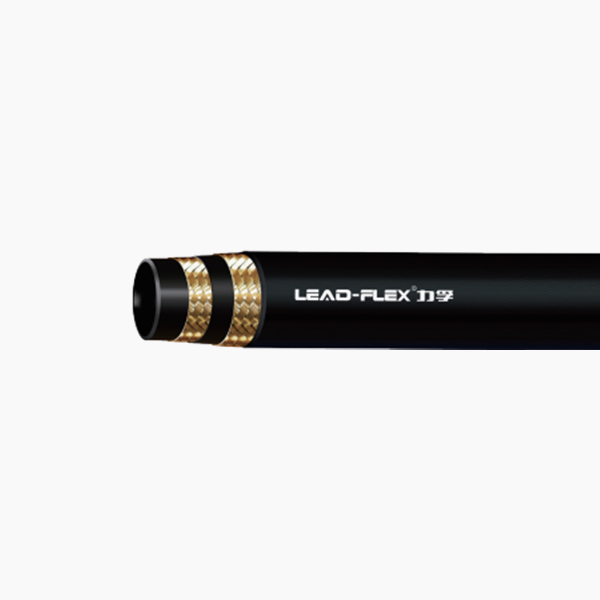
Power packs forcefully concentrate electric motors, gear pumps, and directional control valves into incredibly minimal footprints. This intense structural density creates substantial thermal and vibratory stresses on all connected fluid conduits. Operating temperatures easily climb within enclosed metal cabinets. Furthermore, constant pump pulsations vibrate the entire chassis continuously. Single-wire hose constructions almost always fail under these extreme operational realities. They simply lack the dense structural integrity needed to withstand the brutal pressure spikes generated during rapid valve actuations. To safely manage these intense cyclical loads, you must specify a properly engineered High Pressure Steel Wire Braided Hose. The double layer of high-tensile steel wire provides the mandatory burst resistance while maintaining an acceptable routing profile.
Improper layout planning carries steep and immediate consequences for power pack manufacturers. Hoses violently rubbing against sharp chassis edges or vibrating components will inevitably wear through their protective outer rubber covers. When the braided steel reinforcement exposes itself to ambient moisture, rapid oxidation and fatigue quickly follow. You will soon face expensive warranty claims and unplanned equipment downtime. Furthermore, dangerous high-pressure fluid leaks cause severe environmental damage. They also pose immediate workplace safety hazards, including severe fluid injection injuries. You must plan the hydraulic circuit with absolute precision. Every centimeter matters when interior cabinet space is heavily restricted. The ultimate engineering goal is uninterrupted fluid flow despite constant mechanical vibration and destructive fluid hammer effects.
Specifying the Fluid Conduit: Standard vs. Compact Configurations
You must rigorously evaluate specific structural differences when selecting a two wire braided hydraulic hose. Standard specifications like the widely recognized SAE 100R2AT and EN 853 2SN represent traditional industry choices. They offer proven long-term durability and feature thick protective synthetic rubber covers. These heavy covers resist aggressive external scraping. However, they are often entirely too bulky and stiff for modern, dense hydraulic manifolds. Their large outer diameters consume precious clearance space and impede essential cooling airflow within the unit.
This strict spatial conflict is exactly where the compact advantage becomes undeniably clear. Utilizing a tightly engineered compact two wire hydraulic hose, such as the EN 857 2SC, dramatically simplifies tight installations. It features a significantly reduced outer diameter compared to legacy standard lines. Its tighter minimum bend radius easily resolves stubborn spatial limitations deep inside power pack enclosures. You can safely route it through confined spaces where standard heavy-duty hoses simply refuse to bend. It allows engineers to design smaller overall power pack dimensions without sacrificing any maximum working pressure limits.
However, transparency about performance trade-offs remains crucial for reliable system design. Compact hoses definitely save significant weight and boost installation flexibility. Yet, their thinner external rubber jackets might offer slightly less abrasion resistance against aggressive metal friction points. You must also pair them strictly with specific matching fittings. Using standard R2 ferrules on compact jackets guarantees weak crimps. It will eventually lead to catastrophic blow-offs under heavy load.
Standard vs. Compact Hose Configurations
Specification Profile
Outer Diameter (OD)
Minimum Bend Radius
Primary Use Case Application
EN 853 2SN (Standard R2)
Thicker cover, larger OD
Standard industrial limits
High external abrasion environments
EN 857 2SC (Compact)
Reduced OD, thinner cover
Tighter (up to 30% less than 2SN)
Highly confined power pack chassis
Core Routing Rules for a Double Wire Braided Hydraulic Hose
Routing a Double Wire Braided Hydraulic Hose requires strict adherence to geometric principles and physical realities. First, you must always accommodate pressurized volumetric variance. The absolute physical reality is that flexible hoses change their overall length under maximum operating pressure. As the internal volume expands laterally to contain the fluid force, the hose can contract in length by up to 4%, or elongate by 2%. You must never route these lines in perfectly straight, taut configurations between two fixed ports. Always leave a slight, intentional slack loop. This loop gracefully absorbs the dimensional shift and prevents the fittings from tearing out of their threaded ports.
We strictly enforce several non-negotiable geometric rules for the bend radius during installation:
Never bend a hose immediately at the base of the metal crimped fitting.
Always allow a straight, unbending run of at least 1.5 times the hose outer diameter before initiating any curve.
Strictly avoid any multi-plane bending during the routing process.
Introducing structural twist or torque heavily fatigues the steel wire reinforcement, dropping its burst rating significantly.
Abrasion mitigation remains equally critical for long-term survival in the field. You should actively route high-pressure lines far away from intense ambient heat sources. Keep them isolated from hot exhaust manifolds or radiating electric motors that degrade synthetic rubber. When routing multiple pulsating lines closely together, always employ protective nylon sleeves or heavy-duty spiral guards. Use strategic metal bracket placement to physically separate intersecting hoses. This isolation prevents constant, destructive hose-to-hose rubbing during continuous, high-vibration operation cycles.
Implementation Realities: Clamping, Schematics, and Assembly
Successful power pack integration always starts long before you cut the first rubber line on the workbench. System mapping thoroughly prevents chaos and expensive mistakes on the assembly floor. You should always draft a comprehensive hydraulic schematic prior to any physical assembly. This critical drafting step minimizes messy crossover points and heavily tangled fluid networks. It also vastly simplifies future maintenance access for service technicians working in restricted field environments. Knowing exactly where each line runs ensures a logical, clean build sequence.
Clamping best practices dictate exactly how fluid networks survive long-term mechanical vibration. You must follow a disciplined approach to securing lines:
Space your mounting clamps correctly to secure the hoses tightly along rigid structural rails.
Use specialized elastomeric inserts inside your metal clamps to absorb high-frequency pump vibrations.
Avoid over-tightening the clamp bolts during the final torque process to protect the hose structure.
Clamps should hold the line firmly in place without heavily crushing the outer rubber jacket. A severely crushed jacket physically compromises the underlying wire protective layers. It also actively restricts the natural pressure expansion the hose needs to handle fluid shocks.
Adapter and fitting logic also plays a massive role in assembly success. You should frequently rely on angled fittings like 45-degree or 90-degree block elbows. They naturally relieve direct physical strain on the flexible hose itself. These angled adapters intentionally point the connection interface in the exact required routing direction. This simple strategy completely prevents you from forcing a severe bend that exceeds the minimum radius limits of the hose. Proper, logical fitting selection guarantees the internal fluid flow remains smooth and entirely turbulent-free, reducing unnecessary heat generation.
Vendor Evaluation and Procurement Next Steps
Shortlisting logic matters immensely when moving from initial prototyping to large-scale power pack production. You simply cannot rely on visual inspection or basic marketing catalogs alone. You must rigorously vet potential manufacturing partners for actual OEM capabilities and strict quality control protocols. The truest measure of a global fluid power supplier is their documented, undeniable evidence of reliability.
Demand verifiable testing data before ever signing any bulk purchase orders. You should actively look for suppliers who readily provide comprehensive impulse cycle test reports. Quality manufacturers aggressively test their double wire assemblies to 200,000 impulse cycles per standard SAE norms. They must also supply certified burst pressure documentation and complete raw material traceability files. Quality control systems matter just as much as the physical rubber product. Suppliers should operate under strict ISO 9001 frameworks to guarantee batch-to-batch consistency.
Take decisive next-step actions to secure your production supply chain safely. We highly recommend requesting a formal technical consultation or a limited production sample run first. When you contact your selected vendor, provide extremely exact operational specifications. Detail the maximum required flow rate, peak operating pressure spikes, exact hydraulic fluid type, and ambient temperature range. Supplying these highly specific environmental parameters guarantees you receive an accurate, un-inflated commercial quote. It also ensures the engineering team selects the exact rubber compound suited for your unique application.
A highly successful power pack assembly is a calculated synthesis of correct material specification and highly disciplined geometric planning. Choosing correctly between tight compact lines and rugged standard configurations heavily dictates your overall routing strategy. Proper execution actively protects your expensive equipment from catastrophic fluid leaks. It also extends the active working life of the entire machine significantly, keeping maintenance schedules predictable.
We highly encourage design engineers and procurement managers to act proactively. Consult directly with experienced technical specialists very early in the initial machine design phase. Validate your drafted flow schematics against established industry best practices. Source only fully compliant, heavily tested hose assemblies from rigorously vetted manufacturers. Taking a precise, well-documented approach today absolutely prevents highly expensive, dangerous field failures tomorrow.
FAQ
Q: What is the minimum bend radius for a two wire braided hydraulic hose?
A: The exact bend radius depends entirely on the inner diameter of the specific hose. As a general rule, standard SAE 100R2 lines require significantly wider routing bends than modern compact variations. You must always consult the manufacturer's exact specification table to compare standard R2 dimensional limits versus much tighter EN 857 2SC limits.
Q: Can I use a compact two wire hydraulic hose with standard R2 fittings?
A: No. Fitting compatibility is incredibly strict across all hydraulic systems. Using mismatched standard ferrules or inserts on a compact jacket severely compromises the structural crimp integrity. This dangerous practice instantly voids all safety ratings and invites sudden blow-offs. Always use properly matched fitting systems engineered specifically for compact dimensions.
Q: How do I prevent double wire braided hoses from twisting during installation?
A: We highly recommend relying on the visual "layline" method. The layline is the continuous printed text running along the length of the external hose jacket. Use it as a straight visual guide. If the printed line spirals or distorts while you tighten the final fitting, the hose has twisted. Adjust it immediately until the line sits perfectly straight.