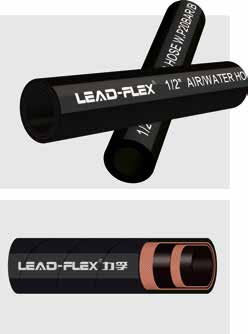
Selecting the wrong industrial hose often leads to severe operational consequences. You might face sudden pump cavitation, hazardous burst lines, and expensive site downtime. These mechanical failures halt daily operations and quickly drain project budgets. Procurement teams and site managers constantly face a difficult balancing act. You must handle the rigorous physical demands of industrial fluid transfer while simultaneously managing strict financial constraints. Complex deployment logistics further complicate your choice between heavy-duty materials and lightweight alternatives. We will explore the critical structural differences between these hose types to help you make informed decisions. You will see an evidence-based comparison contrasting traditional rubber options with collapsible layflat designs. This comprehensive guide ensures you accurately specify the exact equipment required for your heavy-duty site applications. By understanding these technical factors, your teams can optimize performance and prevent critical system failures.
Key Takeaways
Suction vs. Discharge: A rigid rubber water hose is mandatory for water suction applications; layflat hoses are strictly for discharge.
Temperature & Abrasion: Rubber is the necessary choice for handling abrasive materials and operating as a hot water hose, whereas layflat excels in ambient temperature, clean-water transfer.
Mobility & Storage: Layflat hoses offer superior deployment speed and require significantly less storage footprint, reducing logistical overhead for temporary dewatering sites.
Total Cost of Ownership (TCO): While rubber carries a higher upfront cost, its lifespan in harsh terrains often yields a better ROI than frequently replacing punctured layflat alternatives.
Defining the Operational Baseline: Suction vs. Discharge
Industrial fluid transfer relies on specific physical principles. You must understand the difference between negative pressure environments and positive pressure systems. When a pump draws fluid from a source, it creates a vacuum. We call this negative pressure. Conversely, when the pump pushes fluid outward, it creates positive pressure. We refer to this as the discharge phase. Equipment behaves very differently under these two opposing forces.
Negative pressure creates immense structural stress on equipment walls. Atmospheric pressure pushes inward trying to collapse the void. Because of this physical reality, water suction requires specialized reinforcement. Manufacturers embed a rigid wire helix into the core walls. This metal skeleton prevents the line from flattening. If a line collapses during operation, flow stops immediately. This starves the pump and causes severe cavitation damage.
Discharge operations present an entirely different physical environment. The pump exerts positive force outward against the interior walls. Layflat hoses capitalize on this outgoing outward pressure. They utilize the internal fluid force to maintain their round shape. When you turn the pump off, the internal pressure drops to zero. The walls then collapse naturally. This makes them highly effective, but limits their use strictly to the output side of your pumping system.
Rubber Water Hose: Built for High-Stress and Extreme Environments
Industrial sites expose equipment to brutal conditions. Heavy machinery drives over lines. Dragging causes severe friction against jagged rocks. To survive this, engineers design a rubber water hose with heavy wall thickness. They utilize advanced polymer blends like EPDM and SBR. EPDM offers incredible resistance to ozone and weather degradation. SBR provides superior defense against physical scraping. High-tensile textile cords and steel wires reinforce the core. This dense construction resists crushing impacts and prevents kinking during tight maneuvers.
Temperature extremes dictate material choices in many sectors. Manufacturing plants and geothermal sites frequently move scalding fluids. Standard PVC materials melt or lose structural integrity rapidly under high heat. In these scenarios, you must utilize a dedicated hot water hose. Specialized rubber compounds withstand extreme thermal loads without degrading. They maintain their pressure ratings even when handling near-boiling washdown water.
Despite their durability, these heavy-duty lines carry specific implementation risks. You must plan for these operational hurdles:
Heavy physical weight: Thick walls and steel wire add massive weight. Manual deployment becomes slow and labor-intensive. You often require forklifts or winches to move large-diameter sections.
Rigid spatial requirements: The wire helix prevents sharp bends. You need large turning radii to avoid structural damage. Furthermore, these lines do not compress, requiring significant warehouse space for storage.
High initial procurement costs: The complex manufacturing process and raw materials drive up the purchase price. Budgets take a larger initial hit compared to lighter alternatives.
Layflat Hose: Maximizing Portability and High-Volume Output
When mobility takes priority, lightweight collapsible lines excel. Manufacturers build these using distinct material layers. They weave high-strength polyester yarns for the structural jacket. They then extrude PVC, polyurethane (TPU), or nitrile rubber through the weave. This creates a seamless, flexible tube. TPU offers exceptional durability while remaining lightweight. Nitrile-woven options resist oil and chemical exposure. These clever designs expand into rigid cylinders under pump pressure. They instantly flatten back into ribbons when empty.
Logistics teams favor this technology for rapid deployment scenarios. Emergency dewatering and agricultural irrigation require moving massive volumes of water quickly. You can store hundreds of meters on a single lightweight reel. A small crew can roll out a mile of pipeline in hours. Retrieval is equally efficient. You simply drain the line and spool it back up. This drastically reduces labor costs and deployment delays.
However, you must acknowledge the specific implementation risks associated with flexible lines:
Zero vacuum rating: They possess no rigid skeleton. If you connect them to an intake port, they instantly collapse flat. This will critically damage your pump.
Susceptibility to snaking: Sudden pressure surges cause violent movements. The line can twist, whip, or "snake" across the ground. You must secure them properly during startup.
Lower puncture thresholds: The thin walls offer minimal defense against sharp objects. Broken glass, exposed rebar, or sharp rocks easily pierce standard PVC variants.
The Evaluation Matrix: Matching Hose Specs to Site Realities
Proper specification requires analyzing your exact working environment. You must align equipment capabilities with daily operational threats. Safety margins play a critical role here. Engineers measure Working Pressure (WP) against Burst Pressure (BP). A reliable manufacturer builds in a 3:1 or 4:1 safety ratio. If your pump pushes 100 PSI, the burst threshold should reach 300 or 400 PSI. Always match your pump curves to these safety margins to prevent catastrophic ruptures.
Environmental exposure continuously degrades synthetic materials. UV rays break down basic PVC rapidly, causing brittleness. Ozone attacks natural rubber compounds. If your site involves incidental oil or chemical spills, you must choose materials carefully. Nitrile blends resist oil swelling effectively. EPDM handles extended UV exposure without cracking. Assessing your site's specific atmospheric threats extends equipment lifespan drastically.
Fluid composition dictates internal wear rates. Clean water flows smoothly through any pipe. However, industrial sites rarely move pure water. You often pump slurries containing sand, gravel, and suspended solids. These particles act like sandpaper against internal walls. Thick rubber handles this internal abrasion exceptionally well. Standard PVC wears thin and ruptures quickly under heavy slurry loads.
Cost-to-lifespan ratios require careful financial calculation. Upfront purchase price rarely tells the whole story. You must evaluate replacement frequency. A cheap, thin-walled line might save money today. However, if it punctures every month, downtime and replacement costs multiply rapidly. Investing in a robust, heavy-wall solution often yields better long-term budget efficiency in harsh terrains.
Table: Hose Specification Comparison Matrix
Feature / Capability
Traditional Rubber
Collapsible Layflat
Vacuum Resistance
Excellent (Wire reinforced)
None (Collapses instantly)
Abrasion Resistance
High to Extreme
Low to Moderate (TPU is higher)
Thermal Tolerance
High (Up to 200°F+)
Low (Degrades around 140°F)
Deployment Speed
Slow (Heavy and rigid)
Very Fast (Lightweight reels)
Storage Footprint
Large (Maintains full volume)
Minimal (Rolls completely flat)
Integration and Shortlisting Next Steps
Connecting your equipment securely prevents hazardous leaks. Selecting the right fittings proves just as important as the tube material. Camlock couplings dominate general industrial applications. They offer quick, tool-free connections. For heavy agricultural or construction dewatering, Bauer couplings provide robust, lever-action locks. Firefighting and rapid-response teams generally prefer Storz couplings. Ensure your chosen connections match your pump hardware perfectly. Mismatched threads or worn gaskets lead to pressure loss and site flooding.
Proper sizing directly impacts your pump efficiency. Fluid dynamics dictate that smaller internal diameters (ID) create higher friction. This friction loss forces your pump to work harder. Undersizing a heavy-duty line creates a severe operational bottleneck. It reduces your overall flow rate (GPM) and increases fuel consumption. Always consult a friction loss nomograph. Size your internal diameter based on the required flow velocity, not just the pump port size.
Finally, you must verify your vendor's quality standards. Counterfeit or low-grade materials flood the industrial market. Demand clear compliance documentation before authorizing bulk purchases. Look for ISO 9001 certification for manufacturing quality. Check for DIN EN or similar international standards for fitting safety. Request batch testing reports for burst pressure ratings. Reliable suppliers will gladly provide data sheets proving their products meet advertised specifications.
Conclusion
Choosing the correct fluid transfer equipment requires balancing physical physics, site conditions, and deployment logistics. Default to heavy-duty reinforced rubber when your operations involve negative pressure, extreme heat, or highly abrasive slurries. These environments demand structural rigidity and thick protective walls. Conversely, default to lightweight layflat options for temporary dewatering or clean-water discharge where rapid deployment dictates success.
Take immediate action to protect your operations. Gather your specific pump performance curves and maximum operating temperatures. Document your site's terrain challenges and fluid composition. Present this data to a technical sales team to ensure accurate specification. Correctly sizing and selecting your equipment today prevents disastrous failures tomorrow.
FAQ
Q: Can I use a layflat hose for water suction?
A: No. Layflat hoses lack structural reinforcement and will collapse flat under negative pressure, immediately halting flow and potentially damaging the pump.
Q: At what temperature does a standard layflat hose fail compared to a hot water hose?
A: Standard PVC layflat typically degrades around 140°F (60°C), whereas an industrial rubber hot water hose is engineered to withstand continuous temperatures of 200°F (93°C) or higher.
Q: Are TPU layflat hoses as durable as rubber hoses?
A: TPU (Polyurethane) offers excellent abrasion resistance and bridges the gap between PVC and rubber, but a heavy-wall rubber hose still provides superior crush and puncture resistance in extreme industrial settings.