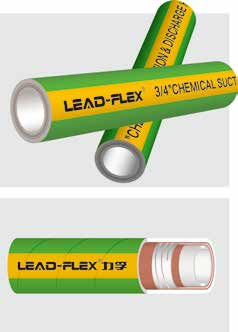
Hose failure in aggressive media environments triggers severe operational consequences. Unexpected ruptures lead directly to dangerous environmental spills. They also create severe safety hazards for your plant personnel. To prevent these disasters, industrial hoses rely on a highly specific internal construction. The innermost layer acts as your primary line of defense. Engineers refer to this critical layer as the "tube" or "liner." It makes direct, constant contact with the transferred fluid. Selecting the right liner material dictates the overall safety of your entire assembly. It also determines the functional lifespan of the hose. This article evaluates why you should specify an Ultra-High Molecular Weight Polyethylene (UHMWPE) liner. We will explore when to use it for demanding fluid and slurry transfer operations. You will learn how to optimize your fluid routing safely and efficiently.
Key Takeaways
UHMWPE liners provide a universally resistant barrier capable of handling up to 98% of common industrial chemicals, acids, and solvents.
Unlike standard rubber liners, UHMWPE offers superior abrasion resistance, making it ideal for abrasive chemical slurries.
While highly versatile and cost-effective, UHMWPE has strict temperature limitations (typically maxing out around 180°F to 212°F depending on the manufacturer) compared to PTFE.
Specifying the correct liner requires balancing chemical concentration, system pressure, operating temperature, and media abrasiveness.
The Cost of Compromise: Why Standard Materials Fail in Harsh Applications
Plant managers often attempt to route complex chemicals through standard rubber hoses. Mismatched materials inevitably lead to rapid, dangerous degradation. When operators choose standard rubber for highly aggressive solvents, the hose tube begins to swell almost immediately. The rubber absorbs solvent molecules like a sponge. This swelling destroys the internal structural matrix. The soft material then begins to leach into the chemical media. Such severe contamination ruins expensive product batches. It forces facilities to scrap entire production runs and risk potential product recalls.
Next, we must examine the vicious abrasion-corrosion cycle. Many industrial slurries contain sharp, suspended solid particles. These particles constantly scrape against the interior walls of the hose assembly. If the liner material lacks sufficient mechanical hardness, abrasive media quickly strips away the weakened rubber. Once this inner surface layer disappears, chemical attacks accelerate rapidly. The aggressive media penetrates deeper into the textile reinforcement layers. Catastrophic bursts follow shortly after this penetration. These sudden failures spray toxic chemicals directly across the workspace.
You cannot treat a purpose-built Chemical Hose as a generic plant floor commodity. Manufacturers engineer these heavy-duty assets specifically to mitigate serious industrial liabilities. Standard water or air hoses simply lack the molecular defenses required for safe solvent transfer. Investing in precisely engineered liners prevents sudden, violent ruptures. It actively protects your frontline workers from hazardous chemical exposure. Proper material selection keeps your entire facility compliant with strict safety regulations.
Core Functions of a UHMWPE Liner in a Chemical Suction Discharge Hose
Ultra-High Molecular Weight Polyethylene (UHMWPE) possesses extreme molecular density. This incredibly dense structure acts as a highly inert barrier against chemical permeation. Because the polymer chains pack so tightly together, aggressive acids cannot penetrate the surface. Corrosive solvents literally bounce off the dense matrix. This universal chemical isolation prevents dangerous cross-contamination entirely. Facilities often use the same hose to transfer several different chemical batches throughout the day. A quick fluid flush cleans the non-porous UHMWPE surface perfectly.
Furthermore, UHMWPE boasts an incredibly low coefficient of friction. A perfectly smooth interior surface drastically improves overall flow efficiency. Fluids and heavy slurries glide across the rigid liner without resistance. This slick surface prevents sticky media from accumulating over time. It eliminates hidden clogging risks inside the hose assembly. You maintain highly consistent volumetric transfer rates. Your pumps consume much less energy pushing dense fluids through a frictionless pipe.
When evaluating a Chemical Suction Discharge Hose, the liner also plays a crucial mechanical role. These specific assemblies must withstand immensely powerful vacuum forces. When subjected to severe negative pressure, the UHMWPE liner maintains strict structural integrity. Supported by an embedded high-tensile wire helix, the rigid liner refuses to collapse inward. This powerful synergy allows operators to draft heavy fluids safely. You can pull dense, toxic sludge from deep storage tanks without flattening the hose profile.
UHMWPE vs. PTFE vs. Rubber: Evaluating Solution Categories
Selecting the perfect fluid transfer hose requires a transparent, evaluation-driven comparison. Engineering teams must weigh specific material strengths against operational limits. You need to understand exactly how different polymers react to heat, friction, and bending forces. We provide a detailed breakdown of the three primary solution categories below.
Narrow chemical spectrum, degrades quickly with mixed batches.
Specific, single-chemical transfer systems.
UHMWPE stands out largely for its exceptional wear and abrasion resistance. It offers broad chemical compatibility across diverse manufacturing sectors. Operators truly appreciate its excellent flexibility for easier routing around tight corners. It arrives at a highly practical procurement price point. However, you must always respect its lower maximum temperature threshold.
PTFE, commonly known as Teflon™, serves as the ultimate fallback for extreme environments. It handles internal fluid temperatures exceeding 400°F easily. It safely transfers the remaining two percent of highly aggressive chemicals. Unfortunately, PTFE has distinct physical drawbacks. It remains highly susceptible to kinking if bent too sharply. It suffers from poor abrasion resistance when moving sharp solids.
Traditional rubber materials provide superior flexibility. They offer specific, targeted chemical resistances for particular fluids. For example, Nitrile handles crude oil transfers flawlessly. EPDM manages dilute acids very well. Yet, rubber possesses a much narrower chemical resistance spectrum overall. It breaks down very quickly when facilities use the same hose for mixed chemical batches. You must dedicate rubber hoses to single-chemical systems.
Implementation Risks and Safety Considerations
Even premium materials fail if operators ignore specific application risks. You must evaluate the working environment holistically. Thermal limitations represent the absolute primary risk factor for UHMWPE liners. The material will experience catastrophic thermal failure if exposed to excessive heat. You must never use high-pressure steam cleaning on these specific liners. If internal processes exceed the specified temperature limit, the plastic begins to soften immediately. It melts and deforms rapidly under pressure. This deformation ruins the smooth interior and compromises personnel safety.
Static accumulation poses another severe threat in chemical processing facilities. Moving volatile solvents through non-conductive plastic generates massive static electricity. Friction builds invisible, highly potent charges inside the hose tube. A sudden electrostatic spark can ignite flammable chemical fumes instantly. You must mitigate this explosive risk during the initial design phase. Specify the necessity of choosing a hose featuring a built-in anti-static wire. Manufacturers embed a conductive copper wire inside the hose wall. This wire safely grounds the assembly. It disperses dangerous electrical charges before they spark.
Finally, pay close attention to coupling and crimp compatibility. Standard water fittings will destroy a chemical liner quickly. You must highlight the importance of using certified, interlocking fittings. Mechanical engineers design these metal fittings specifically for rigid UHMWPE liners. Proper crimping prevents chemical wicking at the hose ends. Wicking occurs when pressurized fluid escapes between the inner liner and the metal fitting. If media escapes into the textile reinforcement layers, the hose swells. The entire assembly will eventually blow off the fitting catastrophically.
Evaluation Checklist for Shortlisting Your Next Chemical Hose
Procurement and engineering teams desperately need an actionable framework. Using a standardized evaluation checklist prevents highly costly specification errors. The S.T.A.M.P.E.D. criteria remains the global industry standard for safe material selection. You should follow this exact sequence when ordering new components.
Size: Measure the exact Inside Diameter (I.D.), Outside Diameter (O.D.), and total length required for your specific installation routing.
Temperature: Record both internal media temperatures and maximum external environmental heat limits.
Application: Determine if the routing is static or dynamic. Identify specific Suction Hose requirements versus pure discharge operations.
Media: Document the exact chemical makeup. Note specific concentration percentages and the presence of any sharp abrasive solids.
Pressure: Confirm the maximum working pressure spikes and the required vacuum rating for drafting.
Ends: Select appropriate, interlocking fitting types. Ensure complete material compatibility between the metal and the transferred fluid.
Delivery: Establish rigorous testing protocols, required material certifications, and acceptable project lead times.
You must enforce strict validation requirements before issuing any purchase order. Advise your buyers to request manufacturer chemical compatibility charts immediately. Ask for comprehensive material test reports to verify all performance claims. If working in delicate food or pharmaceutical environments, demand specific sanitary certifications. Request FDA approvals or USP Class VI documentation upfront. Never assume chemical compatibility based solely on visual similarities. Always rely on hard engineering data to protect your personnel.
Conclusion
A UHMWPE liner serves as the optimal middle-ground for demanding industrial applications. It successfully bridges the gap between high chemical resistance and rigorous mechanical durability. Operators gain exceptional operational protection against sharp abrasives and mixed solvents. They achieve this robust safety without overspending on delicate fluoropolymers like PTFE. It remains a highly practical, scalable choice for modern processing plants.
You should act proactively to secure your fluid transfer systems today. Consult directly with a certified hose specialist to review your unique application requirements. Submit your specific chemical data sheets to ensure absolute material safety. Do not leave hazardous fluid routing to dangerous guesswork. Request a technical quote today to verify compatibility. You will actively safeguard your facility against unexpected failures and protect your valuable workforce.
FAQ
Q: What is the maximum temperature a UHMWPE chemical hose can handle?
A: The maximum temperature typically ranges from 180°F to 212°F. However, this exact threshold depends heavily on the specific chemical concentration transferred. You must always consult the manufacturer's precise specifications. Elevated temperatures can drastically reduce the safe working pressure of the entire assembly.
Q: Can a UHMWPE liner handle abrasive slurries?
A: Yes, handling abrasive slurries represents one of its greatest strengths. UHMWPE possesses exceptional wear resistance. It easily outperforms standard rubber and expensive PTFE options when transferring harsh, solid-laden chemicals. This incredible durability makes it the preferred choice for mining and waste applications.
Q: Is a UHMWPE hose suitable for food-grade applications?
A: While raw UHMWPE is generally non-toxic and non-leaching, you cannot assume every hose is food-safe. Buyers must explicitly verify specific FDA, USDA, or sanitary certifications per the manufacturer. Only fully certified assemblies guarantee safety against contamination in pharmaceutical or food environments.
Q: Why use a UHMWPE suction hose instead of a standard discharge hose?
A: Suction hoses feature a distinct structural addition: an embedded, high-tensile wire helix. This heavy wire prevents the hose from collapsing under intense vacuum forces. When you draft fluids upward from deep tanks, a standard discharge hose flattens. The suction variant maintains a rigid pathway.