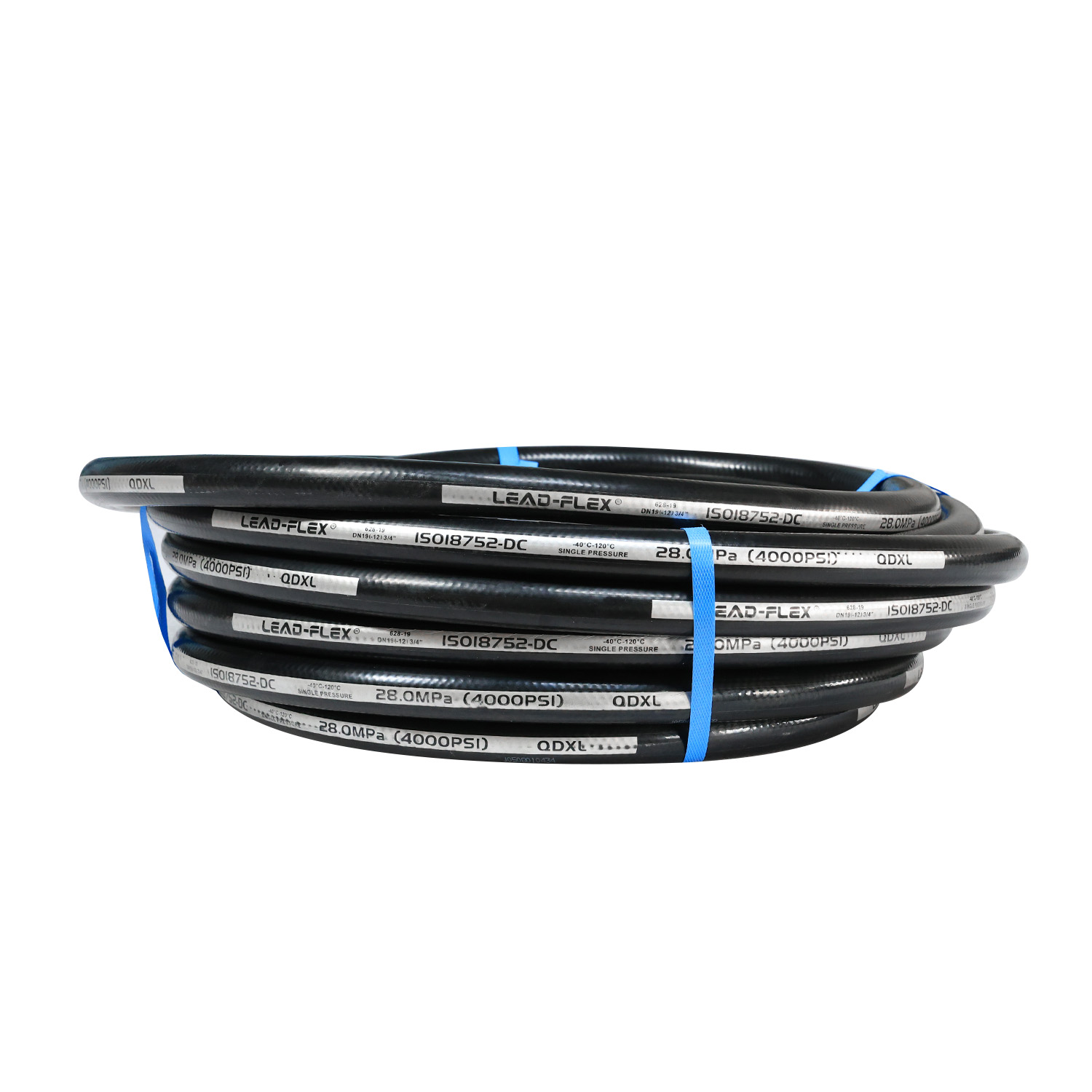
Engineers have long faced a frustrating headache when dealing with legacy SAE hydraulic standards. Working pressure drops drastically as the hose inside diameter (ID) increases. This inverse relationship severely complicates procurement and system design. Today, a major shift toward ISO 18752 addresses these specific design bottlenecks. You can now adopt a constant pressure hydraulic hose as a strategic method to simplify sizing. It reduces overall inventory and strongly mitigates misapplication risks across facilities.
Moving to a constant pressure framework transitions hydraulic line selection away from a complex cross-referencing task. Instead, you gain a streamlined, pressure-first decision matrix. This paradigm shift fundamentally transforms how we build modern fluid power systems. It simplifies technical training for maintenance teams. It also accelerates new equipment design cycles. By standardizing pressure ratings across all sizes, facilities achieve unprecedented operational efficiency and safety.
Key Takeaways
Simplified Sizing: Constant pressure hoses maintain the same working pressure across all IDs, eliminating the need to recalculate pressure limits when up-sizing lines.
Inventory Consolidation: Standardizing by pressure family allows facilities to drastically reduce the number of hose SKUs they need to stock.
Error Reduction: A "one solution for any pressure" approach minimizes the risk of catastrophic failure caused by pairing the wrong hose size with high-pressure system demands.
Easier Installation: Modern constant pressure designs typically offer half the bend radius of standard SAE hoses, solving tight-routing constraints.
The Problem with Traditional Pressure-to-Diameter Scaling
We must first understand the limitations of legacy systems to appreciate modern hydraulic innovations. The industry relied entirely on construction-based standards for decades. This traditional approach created massive scaling problems for engineers.
The Legacy SAE Framework
Traditional SAE 100R-series hoses function based on their physical construction. They dictate how many wire layers a hose must have. Because of this, pressure ratings fluctuate wildly based on the inside diameter. For example, an SAE 100R2 hose easily handles 5,800 PSI at a 1/4" ID. However, if you increase that same hose construction to a 2" ID, the rating plummets to just 1,160 PSI. You lose nearly 80% of your pressure capacity simply by increasing the flow volume.
The Engineering Bottleneck
This dynamic creates severe friction during the system design and evaluation stage. Fluid velocity often dictates line size. If a system runs too hot, engineers must up-size the line to slow down the fluid. Traditionally, up-sizing forces engineers into a corner. To maintain the original pressure rating, they must abandon their current hose specification. They switch to a heavier, bulkier spiral hose. This cascades into mounting problems. It forces layout redesigns to accommodate the stiffer hose. It adds unnecessary weight to mobile equipment.
The Risk Factor
Complexity directly breeds human error on the shop floor and out in the field. Maintenance personnel routinely face urgent repair situations. They might misread a complex spec sheet during an outage. Often, they grab a larger ID hose from the shelf. They incorrectly assume it matches the pressure rating of its smaller counterpart. This oversight causes catastrophic failures, massive fluid spills, and severe safety hazards. The traditional framework relies too heavily on technicians memorizing complex pressure-drop tables.
Common Mistake: Never assume a replacement hose holds the same pressure simply because it shares the same SAE rating as the old line. Always verify the specific pressure limit for the exact internal diameter you plan to install.
How a Constant Pressure Hydraulic Hose Streamlines Selection
The global fluid power industry recognized these systemic flaws. They responded by shifting toward performance-based specifications. This new approach prioritizes application needs over rigid manufacturing constructions.
The ISO 18752 Paradigm Shift
The ISO 18752 standard completely changes the hydraulic design rulebook. It defines how the constant pressure standard works in practical terms. If a mechanical system requires 4,000 PSI, the engineer simply selects the 4,000 PSI hose family. It no longer matters whether the line requires a 1/4" or 1-1/4" internal diameter. The pressure rating remains completely flat across every size in that specific family. This removes the math and guesswork from hydraulic line sizing.
Matching Construction to Application
While the pressure rating remains constant, manufacturers still optimize the physical construction for specific environments. We typically categorize these into two main structures:
Braided Construction: You will often specify a constant pressure braided hose for low-to-medium pressure applications. It offers exceptionally high flexibility. This makes it perfect for tight agricultural machinery or compact manufacturing equipment.
Spiral Construction: Heavy industries require stronger reinforcement. You will implement a constant pressure spiral hose here. Engineers design it for high-pressure, high-impulse environments like underground mining or heavy construction. It handles aggressive pressure spikes without sacrificing the uniform rating rule.
The "One Solution" Approach
We frame this methodology as a highly strategic consolidation tool. OEMs and fleet managers constantly look for predictable performance parameters. A "one solution for any pressure" mindset simplifies every stage of the product lifecycle. Procurement buys fewer variations. Engineers design systems faster. Installers route lines easier. Everyone speaks the same operational language based purely on system pressure requirements.
Operational & Financial Impacts of Standardizing
Switching specifications goes beyond mere technical preferences. It directly impacts your bottom line and facility operations. Standardizing your fluid power components drives immediate, measurable efficiencies across your entire organization.
SKU Reduction & Inventory Carrying Costs
Legacy systems force warehouses to stock dozens of different SAE grades. Moving from varied SAE grades to a few constant pressure families drastically shrinks this footprint. Facilities often reduce their hose inventory by up to 50%. You free up valuable warehouse space. You tie up far less working capital in spare parts. This lean approach prevents dead stock from accumulating on your shelves.
Streamlined Crimp Charts & Fittings
Fewer hose families mean dramatically simplified crimp charts. Technicians no longer need to cross-reference multiple brand charts for different constructions. This simplicity heavily reduces training time for new mechanics. Furthermore, it lowers the risk of mismatched hydraulic adapters and fittings. Applying the wrong crimp specification remains a leading cause of blown assemblies. Consolidation directly mitigates this costly risk.
Upfront Cost vs. Long-Term Value
Many procurement managers express initial skepticism around price per foot. Constant pressure hoses often carry a slightly higher upfront purchase cost compared to standard SAE wire lines. However, the long-term financial value massively outweighs this initial premium. You immediately see reduced scrap rates during assembly. Your facility requires far fewer varied fittings in stock. Most importantly, you minimize expensive unplanned downtime caused by misapplication. When a single hour of machine downtime costs thousands of dollars, the initial premium becomes negligible.
Comparison of Hydraulic Specification Frameworks
Metric
Traditional SAE 100R Framework
ISO 18752 Constant Pressure
Pressure Rating
Drops significantly as ID increases
Remains flat across all ID sizes
Inventory Impact
High SKU count required
Reduces SKUs by up to 50%
Bend Radius
Often rigid at larger sizes
Up to 50% tighter bend radius
Selection Method
Requires complex cross-referencing
Simple "pressure-first" selection
Implementation Realities: Routing, Vibration, and Abrasion
Theoretical benefits mean little if they fail in the field. Real-world implementation involves harsh variables. System vibration, thermal expansion, and external abrasion constantly attack your lines. Modern hoses must address these physical realities head-on.
Routing and Bend Radius
We must strictly address installation realities. Hydraulic connections should rarely be perfectly straight. Thermal expansion, heavy system vibration, and sudden pressure spikes cause lines to expand and contract. A straight, rigid line will inevitably pull and tear at the fittings. Constant pressure hoses offer superior flexibility. They frequently provide half the bend radius of equivalent SAE hoses. This flexibility absorbs shock, prevents premature pulling, and definitively stops fitting leaks. It also allows installers to route lines cleanly through incredibly tight machine corridors.
Managing Abrasive Environments
Heavy machinery operates in brutal conditions. Abrasive environments destroy standard rubber covers long before the internal wire fails. In harsh applications like forestry or mining, simplifying the pressure sizing provides a unique advantage. It allows engineers to focus their attention entirely on specifying the right abrasion-resistant cover. They no longer waste time re-calculating pressure drops for larger lines. They simply pick the pressure family, then upgrade to an ultra-tough outer jacket.
Component Matching
The hose itself solves only half the equation. You must emphasize the importance of component matching. You need the right pipe clamps and hydraulic adapters paired with the newly specified hose. High-pressure systems generate severe mechanical vibration. If you do not clamp the highly flexible line correctly, it will rub against the chassis and fail. Ensuring perfect compatibility between the hose, adapters, and clamps guarantees the simplified selection translates to real-world reliability.
Best Practice: Always leave slight slack when routing flexible lines between two rigid components. A 2% to 4% allowance in line length accommodates internal pressure changes without stressing the crimp joints.
Evaluation Criteria: Making the Switch
Transitioning an entire facility to a new fluid power standard requires careful planning. You cannot simply swap components blindly. You must evaluate your current infrastructure to maximize safety and efficiency.
Audit Current Usage
We strongly advise evaluators to review their current bill of materials (BOM) first. Look closely at your fleet maintenance records. You will likely identify overlapping pressure requirements across many different hose sizes. Group these requirements into standard pressure tiers, such as 3,000 PSI or 5,000 PSI. This audit immediately reveals exactly how many legacy SKUs you can eliminate.
Verify Impulse Cycle Testing
Guide your procurement buyers to look far beyond the static pressure rating. Dynamic machinery creates rapid, violent pressure spikes. Check if the constant pressure hose has undergone severe impulse cycle testing. High-quality lines easily endure 500,000 or even 1,000,000 impulse cycles. These numbers heavily exceed the baseline ISO 18752 requirements. High impulse ratings guarantee the assembly will survive demanding duty cycles without fatiguing.
Fitting Compatibility Checklist
We must explicitly warn against mixing manufacturers. Never attach Brand A fittings to Brand B hoses. Ensure the selected constant pressure hose has a verified, tested coupling and crimp spec system available from the exact same manufacturer. Engineers design the hose and the fitting to interlock precisely. Following strict single-source matching policies guarantees full safety compliance and protects your warranty.
Conclusion
Transitioning to constant pressure hoses is not just a minor technical upgrade. It represents a fundamental, structural simplification of your entire fluid power strategy. It streamlines inventory management, drastically improves safety, and accelerates system design.
This standard proves best suited for modern OEMs, large mobile fleets, and heavy industrial facilities. In these environments, standardizing by pressure yields compounding operational efficiencies. It eliminates guesswork and speeds up critical repairs.
Take action on your inventory today. We encourage you to consult with a certified hydraulic specialist to audit your current hose stock. Download a constant pressure crimp spec chart from your manufacturer to see just how simplified these new parameters can be.
FAQ
Q: Does a constant pressure hydraulic hose cost more than standard SAE hoses?
A: Yes, they generally carry a slightly higher upfront per-foot cost. However, facilities quickly offset this initial premium through massive SKU reduction, lower routing labor costs, and significantly decreased machine downtime.
Q: Can I use my existing hydraulic fittings with a constant pressure hose?
A: You can only do this if the fitting manufacturer explicitly lists compatibility and provides specific crimp dimensions for that exact hose series. Mixing brands actively voids warranties and creates severe safety hazards.
Q: What is the difference between constant pressure braided and spiral hoses?
A: Braided construction offers significantly tighter bend radii, making it ideal for medium pressures in compact spaces. Spiral construction provides the extreme rigidity and strength needed for high-pressure, high-impulse applications. Both adhere strictly to the uniform pressure-across-sizes rule.