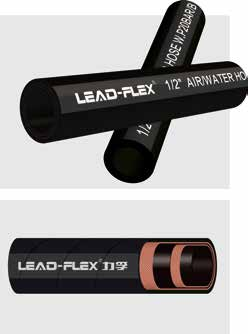
Walk into any busy shared workspace today. You immediately see overlapping utilities and tangled lines snaking across the floor. This operational reality creates severe safety risks from accidental cross-connections. Relying on operator memory or faded tags to identify a specific Air and Water Hose often leads to disaster. When workers confuse these lines, they risk severe equipment damage, compliance failures, and physical harm from hazards like compressed air injection. These mistakes disrupt daily workflow. They also threaten the overall integrity of your facility. To error-proof your utility lines, you need a systematic identification approach. This article explains how you can combine visual standards, clear material specifications, and smart procurement strategies to protect your team. You will learn the established industry color codes, the dangers of swapping lines, and a practical framework for standardizing your work area today.
Key Takeaways
Adhering to ANSI/ASME A13.1 color codes (typically Blue for Air, Green for Water) is the most reliable baseline for industrial facility compliance.
Procuring a purpose-built, color-jacketed AIR/WATER HOSE provides better long-term ROI and safety than retrofitting black hoses with external labels.
While some multi-purpose hoses handle both media, standardizing dedicated, visually distinct lines prevents pressure mismatch and internal degradation.
Facility-wide rollout requires auditing current utility drops, defining procurement criteria, and training staff on the new visual language.
The Cost of Inaction: Risks of Unidentified Utility Lines
Safety Hazards
Unidentified utility lines create immediate, life-threatening conditions on the factory floor. The specific dangers multiply when operators connect pneumatic tools to a Water Hose by mistake. Water rushing into a tool designed for compressed gas causes rapid mechanical failure. Moving parts seize up. Housings can fracture under unexpected hydraulic pressure. Conversely, plumbing compressed air into liquid-only vessels creates a massive explosion risk. Liquid tanks usually lack the structural rating for rapid gas expansion. Injecting high-pressure air into them causes violent tank rupture. This event sends hazardous shrapnel and chemical spills across the shared work area. These safety hazards demonstrate why visual guesswork is never acceptable in utility management.
Compliance & Liability
Regulatory bodies do not tolerate ambiguous utility routing. OSHA expects facilities to maintain a safe working environment under the General Duty Clause. This includes providing clear, unambiguous utility identification. Local codes often adopt ICC guidelines, which mandate strict labeling for fluid and gas distribution networks. Failing to label lines correctly exposes your facility to heavy fines. If an accident occurs due to an unmarked line, liability scales up exponentially. Investigators will immediately check for standardized visual cues. Missing or faded tags serve as direct evidence of negligence. Compliance requires proactive standardization, ensuring any inspector or operator can instantly identify media flow and pressure constraints.
Operational Downtime
Indistinguishable black rubber hoses cripple maintenance efficiency. When every line looks identical, troubleshooting becomes a tedious guessing game. Maintenance crews must trace each hose back to its origin manifold before performing basic repairs. This manual tracing slows down response times during critical leaks. Furthermore, unmarked lines increase the likelihood of cross-contamination. Mixing gas and liquid lines forces extended shutdown periods to purge contaminated systems. Every minute spent draining water out of a flooded pneumatic network translates to lost production revenue. Clear identification eliminates this unnecessary operational downtime. It empowers workers to isolate faults instantly and restore operations without second-guessing their actions.
Industry Standards for Visual Identification
ANSI/ASME A13.1 Framework
The industrial sector relies on the ANSI/ASME A13.1 standard to eliminate confusion across complex piping and hose networks. This established framework provides a universal color-coding logic. It assigns specific background colors based on the inherent hazard of the material flowing inside. Facilities standardizing their shared work areas use this system as their fundamental baseline.
Air Lines: The standard designates compressed air as a low-hazard gas. Manufacturers typically designate these lines using Blue outer jackets. Alternatively, they use Blue labeling featuring highly visible White text.
Water Lines: Standard potable or boiler water falls under low-hazard liquids. Facilities designate these lines using Green jackets. They can also use Green labeling paired with clear White text.
Implementing this framework ensures transient workers, contractors, and permanent staff all speak the same visual language. It replaces subjective naming conventions with an internationally recognized safety standard.
Text & Directional Indicators
Color alone does not guarantee foolproof identification. Facilities must account for visually impaired operators or colorblind staff. Relying purely on a blue or green jacket creates an accessibility gap. To close this gap, stamped or printed text acts as a mandatory secondary check. The layline of the hose must explicitly state the media type, such as "COMPRESSED AIR" or "NON-POTABLE WATER". Furthermore, directional indicators add critical context. Operators need to know the flow direction to safely bleed pressure or isolate valves during maintenance. Printed arrows running alongside the text provide this information at a glance. Combining color codes, explicit text, and directional arrows builds a robust, error-proof identification system.
Evaluating Identification Methods: Factory Color vs. Retrofit Labels
Full-Jacket Color Coding (Recommended)
Procuring a purpose-built AIR/WATER HOSE with full-jacket color coding offers the highest level of reliability. Factory-colored hoses integrate the pigment directly into the outer rubber or polymer layer.
Pros: They remain highly visible from a distance across large shop floors. The color resists peeling, fading, and chemical washdowns. Operators cannot accidentally remove or obscure the identification.
Cons: Standardizing an existing facility requires upfront procurement and replacement. You must disconnect and discard functioning black hoses to implement the new standard.
Retrofit Solutions (Tags, Tape, and Wraps)
Many facilities attempt to save money by applying external labels to existing black hoses. Retrofit solutions include industrial banding tape, self-laminating tags, and colored spiral wraps.
Pros: They offer a low immediate cost. Maintenance teams can apply them directly to existing infrastructure without disconnecting active lines.
Cons: Retrofit adhesives routinely fail in high-temperature or oily environments. Tags snag on mobile equipment, tear off, or become unreadable due to grime accumulation.
Table: Comparison of Utility Identification Methods
Feature
Factory Full-Jacket Color
Retrofit Labels / Tags
Durability
Excellent (Built into material)
Poor to Fair (Prone to tearing)
Visibility
High (Visible along entire length)
Low (Only visible near connection)
Adhesion Risk
None (No adhesives used)
High (Fails in oily/hot areas)
Implementation Speed
Slower (Requires system shutdown)
Fast (Applied while running)
Decision Criterion
Facility managers must base their identification strategy on environmental demands. We advocate heavily for factory-colored hoses in permanent, high-traffic shared areas. The harsh conditions of an active shop floor will quickly destroy aftermarket tape. You should relegate tags and wraps strictly to temporary setups. They also serve a purpose in low-wear, static environments where abrasion risks remain minimal. For long-term safety, always invest in built-in visual identification.
Structural Differences: Why "Multi-Purpose" Still Needs Labeling
Material Compatibility
Many procurement departments stock general-purpose hoses to simplify inventory. Often made of EPDM or Nitrile, these versatile tubes can technically handle various fluids. However, treating them as universally interchangeable creates hidden dangers. A dedicated Air Hose often features a specific inner tube formulated to resist aerosolized compressor oils. Meanwhile, a line meant for heated liquid demands higher thermal stability. They frequently carry vastly different maximum pressure (PSI) ratings. Pushing a high-pressure pneumatic application through a low-pressure liquid line risks sudden, violent bursts. You must label multi-purpose materials clearly to designate their assigned role and operational limits.
The Danger of Swapping
A common mistake occurs when operators grab a previously used liquid line for a pneumatic tool. You cannot simply switch them back and forth. A hose used for liquid retains residual moisture inside its lining. If you connect this repurposed line to a pneumatic paint sprayer, the moisture carries over into the airflow. This trapped water ruins automotive finishes, corrodes expensive internal air tool mechanisms, and promotes bacterial growth. Once you dedicate a line to a specific medium, it must remain permanently assigned to that task. Proper labeling enforces this rule and prevents disastrous swapping.
Evaluation Lens
Standardizing visual identification changes how your team evaluates equipment. It prevents operators from assuming all identical-looking black lines possess the same structural integrity. A hose looks fine on the outside even if its inner tube has degraded from incompatible chemical exposure. Visual coding tells the operator exactly what history that specific tube carries. It removes dangerous assumptions. When you clearly mark the limits and the intended medium, you protect both the equipment and the personnel handling it.
Implementation Framework: Standardizing Your Shared Work Area
Transforming a chaotic workspace into a systematically labeled environment requires a phased approach. Follow these four actionable steps to execute a successful facility-wide rollout.
Step 1: Facility Audit. Begin by walking the floor. Map all current pneumatic and hydraulic drops. You need to identify every unmarked, faded, or ambiguously marked line. Document the working pressure, media type, and environmental hazards present at each drop location. This audit forms the baseline for your upgrade project.
Step 2: Define Procurement Specs. Update your internal purchasing policies immediately. Establish a strict mandate for all future utility purchases. Any new line must arrive with factory-standard color coding (Blue for gas, Green for liquid). It must also feature continuous layline printing that dictates the PSI rating and fluid type. Reject vendor shipments that do not meet these visual requirements.
Step 3: Rollout & Phasing. Do not attempt to replace every line overnight. Prioritize replacing hoses in high-risk or high-traffic areas first. Look for zones where multiple utilities overlap physically. Use strict lockout/tagout (LOTO) procedures during the transition. Depressurize and isolate the manifold before swapping the old black rubber for the new color-coded lines.
Step 4: Operator Training. Never assume color codes are intuitively understood by every employee. You must actively educate your workforce. Post highly visible reference charts at key utility drops and compressor stations. Include the ANSI color code framework in all new site onboarding materials. Staff must understand exactly why the blue line can never connect to the green manifold.
Conclusion
Relying on guesswork to manage your air and water lines is an unforced error in facility management. Tangled, unidentified black rubber lines invite accidents, increase downtime, and expose your company to severe compliance violations. By acknowledging the dangers of cross-connections, you can take proactive steps to secure your shared work areas.
We strongly advise decision-makers to prioritize built-in visual identification. Opt for factory-extruded color jackets and clearly printed laylines over temporary aftermarket tagging. This standard ensures long-term safety, simplifies maintenance troubleshooting, and maintains strict regulatory compliance.
Take action today. Audit your current shared workspaces to locate unmarked utility drops. Consult with a reliable supplier to source properly coded, application-specific lines, and implement a robust visual standard that protects your entire workforce.
FAQ
Q: Can an Air Hose be used as a Water Hose?
A: Yes, if rated as a multi-purpose hose, but it must be permanently dedicated and visually identified for one specific medium to prevent moisture damage to pneumatic systems. Never swap them back and forth.
Q: What are the official ANSI color codes for air and water?
A: Under ANSI/ASME A13.1, compressed air is generally marked with blue (or yellow if deemed hazardous/high pressure in specific plant contexts), and potable/boiler water is green. Always verify with specific site safety protocols.
Q: How do you label existing black rubber hoses?
A: Use industrial-grade, oil-resistant pipe banding tape or self-laminating tags near the connection points, ensuring text clearly states the fluid and pressure rating. However, factory-colored jackets remain the safer, permanent choice.
Q: Why is my multi-purpose AIR/WATER HOSE failing early?
A: Failure often occurs if the hose is exposed to media outside its spec (e.g., hot water exceeding the EPDM rating) or if it experiences pressure spikes beyond its working PSI, highlighting the need for specific identification.