In industrial fluid and steam transfer, there is no room for error. Premature hose degradation leads to unexpected downtime, hazardous leaks, and costly safety violations. Standard rubber hoses often degrade rapidly. They fail when exposed to extreme UV, ozone, or saturated steam. The HG-T3036 EPDM Hose addresses these specific vulnerabilities. It uses a highly specialized compound and structural design to prevent sudden ruptures.
This guide breaks down the engineering rationale behind the HG-T3036 standard. We detail structural advantages, operational trade-offs, and critical evaluation criteria. Procurement and engineering teams can use this knowledge directly. You will learn how to determine if this is the correct solution for your facility.
Key Takeaways
Targeted Durability: Engineered specifically for excellent ozone, weathering, and heat resistance, outperforming standard synthetic rubbers in outdoor and high-temperature environments.
Structural Integrity: Features a multi-tier construction (inner lining, reinforcement, micro-porous outer cover) designed to absorb vibration and prevent steam blistering.
Strict Limitations: While highly resistant to water, steam, and select chemicals, EPDM is strictly incompatible with petroleum-based oils and hydrocarbons.
Compliance & Safety: Evaluated against standardized manufacturing protocols (HG/T 3036) to ensure consistent burst pressure and volumetric stability under load.
The Hidden Costs of Fluid Transfer Failures in Harsh Environments
Standard hoses often fail in demanding environments. These failures rarely happen due to simple pressure overloads. Instead, material fatigue causes the breakdown. Environmental stressors and aggressive chemicals weaken standard polymers over time. Facilities frequently underestimate these slow-moving threats. This oversight results in catastrophic line failures and disrupted operations.
UV and Ozone Degradation
Continuous outdoor exposure attacks inferior rubber compounds. Ultraviolet light initiates photo-oxidation on the hose surface. Ozone acts similarly, breaking the molecular bonds in standard elastomers. This chemical attack causes the outer cover to become brittle. Micro-cracking soon develops along the hose length. These tiny cracks expose the vulnerable reinforcement layers to moisture and debris. Eventually, this progressive decay leads to sudden, catastrophic failure during normal pressurization.
Thermal Fatigue
Industrial processes often involve fluctuating temperatures. Saturated steam applications are particularly brutal on fluid transfer lines. Heat causes the hose materials to undergo rapid structural expansion. When the line cools, the materials contract. This constant physical shifting induces severe thermal fatigue. Without proper dampening elements and heat-resistant linings, ordinary hoses harden rapidly. They lose their flexibility and eventually rupture under stress.
Direct Business Impact
Ignoring these environmental and thermal realities severely impacts operations. Plants suffer from abnormally high replacement frequencies. Maintenance teams waste valuable labor hours constantly swapping out degraded lines. More importantly, weakened hoses pose severe safety risks. High-pressure steam or chemical leaks threaten worker safety immediately. They also expose the facility to strict environmental compliance violations and subsequent regulatory fines.
Anatomy of the HG-T3036 EPDM Hose: Features to Outcomes
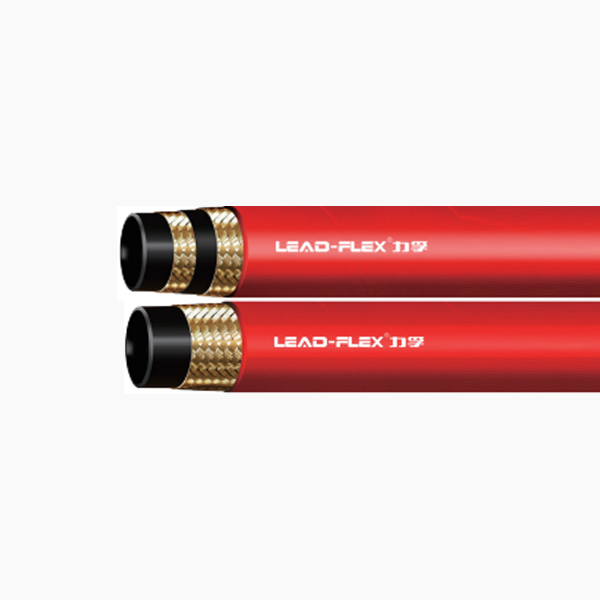
The HG-T3036 EPDM Hose moves away from single-material limitations. It relies on a sophisticated, three-layer composite architecture. Engineers designed each layer to perform a specific defensive function. Together, they create a highly resilient conduit capable of handling intense industrial demands.
Inner Tube: Chemical and Heat Defense
The innermost layer handles direct contact with the transfer medium. Manufacturers construct this tube from a heat-resistant synthetic EPDM rubber blend. This specific polymer matrix resists oxidation and thermal breakdown remarkably well.
Design Feature: High-density EPDM extrusion.
Mechanical Function: Isolates the fluid and retains system heat.
Outcome: Sustains continuous exposure to elevated temperatures and specific corrosive agents. The material prevents inner hardening, flaking, or erosion over prolonged use.
Reinforcement Layer: Structural Stability
Pressure containment requires robust internal support. The reinforcement layer typically utilizes high-tensile steel wire braiding. Some variations use specialized, high-strength synthetic textiles depending on the pressure rating.
Design Feature: Woven steel wire or multi-spiral textile wrapping.
Mechanical Function: Binds the inner tube and resists internal outward force.
Outcome: Buffers severe thermal expansion. It restricts volumetric expansion to ensure faster system response times. It also dampens intense system vibrations and sudden pressure surges safely.
Micro-Porous Outer Cover: Environmental Shield
The outermost layer acts as the primary environmental barrier. It consists of a specialized EPDM layer featuring microscopic perforations. This design is highly intentional for steam applications.
Design Feature: Pinhole-pricked EPDM outer sheath.
Mechanical Function: Vents permeated gases while blocking external contaminants.
Outcome: Allows trapped steam and expanding gas to escape safely. This venting prevents the rubber cover from bubbling or blistering. Simultaneously, it provides exceptional resistance to mechanical abrasion, UV rays, and ozone.
Material Capability & Trade-offs: Is EPDM the Right Choice?
Material selection demands a highly objective evaluation. You must examine both capabilities and hard limitations simultaneously. EPDM is an exceptional polymer, but it is not universally applicable. Applying it in the wrong environment guarantees failure.
Where HG-T3036 Excels (Pros)
The HG-T3036 EPDM Hose thrives in high-temperature aqueous environments. It delivers exceptional performance in saturated steam and hot water applications. Engineers also favor it heavily for glycol cooling systems. The single-bond molecular structure of EPDM gives it high compatibility with many dilute acids, alkalis, and oxygenated solvents. Furthermore, it maintains excellent flexibility in extreme cold while resisting thermal breakdown in intense heat.
Where It Fails (The Trade-off)
EPDM possesses one critical vulnerability: zero oil resistance. You must never use this hose for petroleum-based fluids. Exposure to diesel, lubricating oils, or hydraulic fluids causes rapid degradation. The EPDM material will swell aggressively, lose its tensile strength, and dissolve from the inside out. For hydrocarbon applications, you must specify NBR (Nitrile) or PTFE variants instead.
Dynamic Variables to Consider
Chemical compatibility is never entirely static. Real-world operations introduce variables that alter material resistance. Fluid temperature drastically changes chemical aggressiveness. A chemical safe at room temperature might destroy the hose at 150°C. Chemical concentration also dictates lifespan. Finally, dynamic flexing—bending the hose while it is fully pressurized—creates localized mechanical stress. This physical strain accelerates chemical degradation significantly.
Performance Metric | EPDM (HG-T3036) | NBR (Nitrile) Alternative |
Steam & Hot Water Resistance | Excellent (Up to ~210°C) | Poor to Moderate |
UV & Weathering | Outstanding | Poor (Prone to cracking) |
Petroleum/Oil Resistance | Strictly Incompatible (Fails) | Excellent |
Flexibility in Extreme Cold | High | Moderate (Stiffens) |
Key Applications for the HG-T3036 EPDM Hose
Understanding where this hose excels helps justify its specification. Proven deployment scenarios demonstrate where the HG-T3036 standard yields the highest operational reliability. Industry leaders rely on it across several critical sectors.
Refineries and Petrochemical Plants: These facilities require massive amounts of thermal energy. Hoses safely transport high-pressure saturated steam to crude oil reboilers. They also supply steam to cracking furnaces. The EPDM cover withstands the harsh exterior refinery environment perfectly.
Power Generation Facilities: Power plants utilize complex steam networks. The hose connects main steam headers to secondary turbines and auxiliary heating units. The wire reinforcement dampens intense system vibrations. The inner tube retains critical heat energy during transfer.
Chemical Processing and Transfer: Chemical plants move vast volumes of compatible alkaline and acidic solutions. Standard indoor hoses fail quickly here. The HG-T3036 standard excels because it handles both the aggressive internal chemicals and constant external weathering simultaneously.
Facility Maintenance Support: Large-scale industrial cleaning requires mobile steam units. Maintenance teams use these lines for short-duration, high-temperature steam cleaning. Food and beverage plants use them for equipment sterilization processes. The hose handles extreme heat spikes without internal degradation.
Implementation Risks and Quality Evaluation Criteria
Specifying the right material is only the first step. You must also evaluate the physical product and the installation parameters. Poor manufacturing or improper routing will ruin even the best EPDM compound. Procurement teams must audit suppliers rigorously.
Verifying Standard Compliance
Never accept generic "steam hoses" for critical applications. You must ensure the manufacturer provides valid documentation. Require test certificates proving strict adherence to HG/T 3036 or equivalent ISO 6134 manufacturing protocols. These standards dictate rigorous burst pressure thresholds, elongation limits, and volumetric stability tests. A compliant hose guarantees predictable performance under heavy load.
Bend Radius vs. Routing Space
Engineers must carefully assess the specified minimum bend radius. Compare this metric directly against the facility's physical layout. Forcing a hose into a tight bend that exceeds its rating is dangerous. It stretches the outer cover and compresses the inner tube. This physical distortion reduces the hose's pressure threshold significantly. It also invites structural kinking, which restricts flow and creates localized pressure spikes.
Coupling and Fitting Compatibility
The hose is only as strong as its connections. An incompatible fitting creates an immediate failure point. Improper crimping techniques will damage the reinforcement wire, causing the fitting to blow off under pressure. You must specify exact end requirements based on system vibration profiles. Determine whether the application requires flanged, threaded, or custom vulcanized ends. Always match the coupling material to the fluid to prevent galvanic corrosion.
Use the following evaluation chart to streamline your procurement audit process before finalizing any vendor agreements.
Audit Category | Evaluation Checkpoint | Action Required |
Compliance | HG/T 3036 or ISO 6134 | Request certified lab test reports. |
Physical Routing | Minimum Bend Radius | Measure site layout; avoid tight angles. |
Compatibility | Fluid & Temperature | Cross-reference maximum continuous temp. |
Couplings | Crimping & Material | Ensure factory-crimped, vibration-rated ends. |
Next Steps for Procurement
Before issuing a purchase order, procurement teams should request specific data. Ask the manufacturer for a detailed chemical resistance chart specific to their EPDM compound. Formulations vary between brands. Next, request a physical sample. Conduct small-scale compatibility testing under actual operating temperatures and pressures to validate performance.
Conclusion
The HG-T3036 EPDM Hose serves as a highly specialized, reliable conduit for industrial operations. It handles steam, hot water, and compatible chemicals safely. Its unique three-layer architecture offers unmatched longevity against harsh weather, ozone, and thermal stress. By venting trapped gases and absorbing vibration, it prevents the sudden catastrophic failures common in ordinary rubber lines.
Your success with this product depends entirely on respecting its strict limitations. Keep it strictly away from hydrocarbons and petroleum-based fluids. Moving forward, engineering teams must cross-reference actual fluid concentrations and maximum operating temperatures. Evaluate your dynamic routing requirements carefully before finalizing your specification. By matching the hose capabilities to precise environmental demands, you ensure long-term, leak-free transfer performance.
FAQ
Q: What is the maximum operating temperature for an HG-T3036 EPDM Hose?
A: The operational range usually peaks around 150°C to 210°C for saturated steam. Dry heat tolerances may vary. High temperatures accelerate chemical reactions, so you must always verify the exact manufacturer specifications for your specific fluid.
Q: Can I use EPDM hoses for hydraulic systems or diesel transfer?
A: No. EPDM has zero chemical compatibility with petroleum-based fluids. Exposure to diesel or hydraulic oil causes the rubber to swell, degrade, and rupture quickly. You must use NBR or thermoplastic alternatives for these fluids.
Q: How does dynamic bending affect the chemical resistance of the hose?
A: Mechanical stress from dynamic bending stretches the polymer bonds. This physical strain accelerates chemical degradation significantly. It lowers the effective pressure limits and shortens the lifespan compared to static, room-temperature laboratory tests.
Q: Why does the outer cover of some steam hoses have micro-perforations?
A: High-temperature steam transfers cause gases to permeate the inner tube. Micro-perforations allow these trapped gases to vent safely. Without them, expanding gas would cause the outer rubber cover to bubble, blister, and ultimately tear apart.


