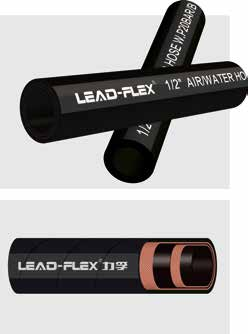
Fleet operators face incredibly high stakes during fluid transfer operations. Specifying the wrong equipment leads to catastrophic fluid leaks and steep regulatory fines. It also causes premature wear and intense operator fatigue. Procurement teams and fleet managers need an evidence-based decision framework to navigate these risks. We must move beyond basic spec sheets. You must evaluate how equipment performs under actual operational realities.
This guide provides a comprehensive framework for selecting the right transfer equipment. We focus on evaluating chemical compatibility to prevent dangerous failures. We also explore operator ergonomics. Factors like winter flexibility directly impact safe daily handling. Finally, we break down essential safety compliance standards. These guidelines will help you shortlist reliable suppliers and optimize your fleet operations.
Key Takeaways
Matching the hose material to the exact fluid (and tanker type, e.g., DOT 406/407) is the non-negotiable baseline for safety and longevity.
Operator ergonomics—specifically hose weight and cold-weather flexibility—directly impact loading times and accident rates.
Proper sizing requires balancing flow rate demands with suction/vacuum capabilities to prevent hose collapse.
1. Assessing Fluid Compatibility and Tanker Types
The Business Problem of Generic Selection
Many operators make a critical error during procurement. They use a generic industrial hose for specialized fluid transfers. This mistake degrades the inner tube rapidly. Hazardous chemicals and refined fuels attack incompatible rubber compounds. This degradation risks catastrophic failure, environmental contamination, and severe safety hazards. Fluid compatibility dictates your exact material requirements.
Evaluation Dimension: Media Types
Different fluids require highly specific internal tube constructions. You cannot use a one-size-fits-all approach.
Petroleum and Refined Fuels: These liquids demand nitrile or specialized synthetic blends. Nitrile provides essential oil resistance. It prevents the tube from swelling or blistering. These assemblies also require anti-static properties to prevent spark ignition.
Corrosive Chemicals: Harsh acids and bases require highly resilient tubes. Manufacturers typically use UHMWPE (Ultra-High Molecular Weight Polyethylene) or XLPE (Cross-Linked Polyethylene). These plastics resist chemical breakdown effectively.
Septic and Waste: Waste applications require robust abrasion resistance. Septic trucks encounter mixed, unpredictable media. The fluid often contains harsh solids, debris, and varying chemicals. The inner tube must withstand continuous physical scouring.
Application Matching by Tanker Classification
You must tie your selection to specific tanker classifications. This ensures strict regulatory alignment. For example, DOT 406 tankers haul flammable liquids like gasoline. They need specific petroleum-grade assemblies designed for gravity drops or low-pressure pumps. DOT 412 tankers haul heavy corrosives. They operate at higher pressures and require heavy-duty chemical hoses. Matching the equipment to the Department of Transportation (DOT) code prevents compliance violations.
Best Practices for Fluid Assessment
Always request a chemical resistance chart from your manufacturer. Cross-reference the specific concentration and temperature of your media. A chemical might be safe at room temperature but highly corrosive at elevated temperatures.
Common Mistakes to Avoid
Never substitute a chemical-grade tube for a food-grade application. Likewise, do not use water suction assemblies for fuel transfers. The materials will break down and contaminate your payload.
Fluid Compatibility Matrix
Fluid Type
Recommended Tube Material
Typical Tanker Class
Primary Risk of Failure
Gasoline / Diesel
Nitrile (Buna-N)
DOT 406
Tube swelling and static ignition
Acids / Solvents
UHMWPE / XLPE
DOT 412
Chemical degradation and blistering
Septic / Wastewater
Natural Rubber / SBR blend
Vacuum Trucks
Internal abrasion from solids
2. Core Specifications: Sizing, Pressure, and Vacuum Ratings
Sizing and Flow Rate Dynamics
Proper sizing follows a precise formulaic approach. You must match the inner diameter (ID) to your required flow rates. This balance minimizes transfer time without causing excessive fluid turbulence. If you choose an ID too small, the internal pressure spikes. This forces the pump to work harder. If you choose an ID too large, the system loses velocity and efficiency. Operators must calculate the optimal flow velocity for their specific pump capacity.
Working Pressure vs. Burst Pressure
Working pressure and burst pressure represent two entirely different limits. The industry standard safety factor is typically 4:1. This means the burst pressure is four times higher than the maximum working pressure. Operating near the maximum pressure constantly degrades the assembly faster. You should aim to operate at roughly half the maximum working pressure. This safety margin accommodates sudden pressure spikes and fluid hammers during valve closures.
Suction and Vacuum Requirements
Vacuum applications demand specialized structural designs. A standard soft-wall tube will collapse completely under negative pressure. You must use a dedicated suction hose reinforced with a rigid helical wire. This embedded wire prevents tube collapse during vacuum operations. Vacuum trucks, septic applications, and bottom-loading scenarios rely heavily on this reinforcement. Even standard unloading processes sometimes create negative pressure. If your pump pulls faster than the fluid flows, you need wire reinforcement.
Fittings and Couplings Integration
Leaks almost always occur at the connection points. High-risk transfers necessitate factory-crimped fittings. Field-attached bands often fail under physical stress. Factory crimping provides a permanent, full-circumference seal. It locks the coupling directly into the wire reinforcement. This prevents blow-offs during high-pressure surges. Always specify interlocking ferrules for hazardous chemical applications.
Best Practices for Specification
Verify the pressure rating of both the tube and the couplings. An assembly is only as strong as its weakest component. If you pair a 150 PSI tube with a 50 PSI camlock, your maximum working pressure is 50 PSI.
3. Operator Ergonomics and Environmental Realities
The Implementation Reality for Users
Real-world operators face severe physical challenges daily. They frequently complain about assemblies being too heavy to lift. A fully loaded assembly can weigh hundreds of pounds. Hoses also become rigid and completely unmanageable in sub-zero temperatures. Handling a stiff, 20-foot tank truck hose leads to severe driver fatigue. It significantly increases the risk of musculoskeletal disorders and workplace injuries.
Cold Weather Flexibility
Cold weather flexibility remains critical in northern climates. Standard polymers have specific temperature limits. They stiffen dramatically when exposed to frost. You must review low-temperature ratings carefully. Specialized rubber compounds maintain pliability in freezing winter conditions. Manufacturers design "arctic" blends to prevent the cover from cracking. These low-temp rated assemblies bend easily even at -40 degrees Fahrenheit. This allows operators to route them safely without struggling.
Balancing Weight Against Durability
Fleet managers must balance physical weight against operational durability. A thick, abrasion-resistant cover extends service life. However, it adds significant weight to the assembly. You must consider the ergonomic reality of the driver. If a driver wrestles heavy equipment daily, loading times increase. Accident rates also rise due to physical exhaustion. Corrugated covers offer an excellent compromise. They provide superior flexibility and lower weight compared to smooth covers.
Cover Protection and Environmental Resistance
The outer cover plays a vital role in protecting the internal reinforcements. It must resist environmental ozone and intense UV rays. Sun exposure dries out standard rubber, causing dangerous surface cracks. The cover must also withstand constant ground dragging. Loading bays feature rough concrete surfaces. Drivers routinely drag equipment across these abrasive floors. You should look for covers wrapped in ultra-high abrasion-resistant materials. Some models feature external scuff guards or plastic wear spirals to extend longevity.
Common Mistakes in Handling
Never allow drivers to bend the assembly past its minimum bend radius. Forcing a tight bend kinks the structural wire. Once the wire kinks, the structural integrity vanishes. The assembly must be retired immediately.
4. Flexible Assemblies vs. Loading Arms: When to Upgrade
Understanding Solution Categories
Fleet operators must choose between flexible assemblies and rigid loading arms. Both solutions facilitate fluid transfer. However, they serve different operational scales and environments. Understanding their comparative advantages ensures you deploy the right technology for your facility.
Comparative Framework
We evaluate these solutions across three primary dimensions:
Initial Cost and Installation: Flexible assemblies present a drastically lower barrier to entry. They cost much less to purchase initially. They require zero civil engineering or permanent structural installations. Loading arms demand extensive engineering, concrete foundations, and high upfront capital.
Flexibility and Routing: Hoses win easily in tight, non-standardized loading bays. They offer unmatched mobility. You can route them around obstacles. They are absolutely essential for field deliveries where the truck cannot park perfectly. Loading arms have a fixed reach and require precise vehicle positioning.
Lifespan and Ergonomics: Loading arms offer a significantly longer service life. Steel pipes do not degrade from UV exposure or ground dragging. Furthermore, loading arms feature counterbalanced weights. This mechanical assist drastically reduces operator strain. The operator guides the arm rather than lifting it.
Decision Logic for Fleet Managers
We recommend flexible assemblies for highly variable delivery routes. They remain the best choice for field unloading operations. Budget-conscious fleets benefit from standardizing on premium flexible equipment. However, permanent loading arms make more sense for fixed, high-volume terminals. If trucks park in identical positions every single day, loading arms provide superior efficiency. Upgrading to loading arms at busy depots reduces long-term physical wear on your workforce.
Flexible Hoses vs. Loading Arms Comparison
Feature
Flexible Hoses
Rigid Loading Arms
Initial Investment
Low
High
Installation Requirements
None (Ready to use)
High (Civil engineering required)
Mobility and Routing
Excellent (Highly adaptable)
Poor (Fixed position only)
Operator Ergonomics
Moderate (Requires lifting)
Excellent (Counterbalanced)
Environmental Susceptibility
High (UV, ground dragging)
Low (Steel construction)
5. Safety Compliance and Shortlisting Suppliers
Authoritativeness and Compliance Standards
Compliance ensures operational safety and strong legal protection. You should look for critical industry standards when shortlisting suppliers. Key frameworks include API (American Petroleum Institute) for oil applications. EN (European Norms) provides rigorous testing parameters for chemical transfers. NAHAD (The Association for Hose and Accessories Distribution) publishes the 400 series guidelines. These guidelines dictate exact fabrication and testing procedures for industrial assemblies. Sourcing from NAHAD-certified fabricators guarantees superior build quality.
Electrical Continuity in Fluid Transfer
Electrical continuity remains vital during petroleum and chemical transfers. Flowing fluids generate massive amounts of static electricity. If this static cannot escape, it arcs. You must require anti-static wires in your assemblies. Static-dissipating tube designs also perform this function safely. This prevents devastating spark ignitions. The internal wire must connect securely to the metal couplings to provide a continuous grounding path.
Shortlisting Logic and Supplier Demands
Shortlisting suppliers requires a strict, evidence-based vetting process. Do not accept verbal assurances. You should demand verifiable test certificates for every specific assembly. Ask for hydrostatic test records showing the equipment held its proof pressure without leaking.
Look for clear traceability on the product itself. Branding and laylines should clearly indicate the specifications. The layline must show the working pressure, the tube material, the relevant standard, and the exact manufacture date. This helps you track the equipment's lifecycle.
Finally, demand transparent warranty terms. A trustworthy supplier provides robust post-sale inspection support. They should offer guidance on visual inspection protocols and retirement criteria.
Best Practices for Procurement
Establish a standardized procurement specification document for your fleet. List the exact ID, length, pressure rating, fitting type, and required certifications. Send this exact document to multiple certified fabricators to ensure apples-to-apples bidding.
Conclusion
Choosing the right transfer equipment requires balancing multiple critical factors. You cannot rely on purchase price alone. You must prioritize chemical compatibility to prevent dangerous structural degradation. You should invest heavily in ergonomic designs, like cold-weather flexibility and corrugated covers, to protect operators from fatigue. Furthermore, matching pressure ratings and suction capabilities to your specific tanker class prevents catastrophic blow-outs and tube collapses. Always demand factory-crimped fittings and strict adherence to API or NAHAD compliance standards.
Start your optimization process today. Audit your current equipment failure rates to identify weak points. Consult directly with your drivers regarding cold weather handling issues and physical strain. Finally, contact certified suppliers to request custom specification sheets tailored entirely to your specific tanker fleet operations.
FAQ
Q: How often should a tank truck hose be replaced?
A: You should replace it based on rigorous visual inspection and routine testing schedules rather than a rigid timeline. Examine the cover daily for deep cuts, severe weathering, or exposed internal wire reinforcement. You must also conduct hydrostatic testing annually to ensure structural integrity. If the equipment fails testing, or shows permanent kinking, retire it immediately.
Q: What is the difference between a discharge hose and a suction hose?
A: A discharge assembly features a soft-wall design meant only for positive pressure applications. It pushes fluid out. A suction assembly contains a rigid structural helical wire. This wire reinforcement prevents the tube from collapsing inward under severe vacuum conditions during unloading or active pumping.
Q: Why do some hoses become stiff and difficult to handle in winter?
A: Standard industrial polymers have specific temperature limits. They stiffen dramatically when cold. In freezing climates, standard rubber loses its natural elasticity. You must specify "arctic" or low-temperature rated compounds. These specialized materials maintain flexibility in sub-zero weather, protecting operators from severe handling injuries.
Q: How do I prevent static buildup when unloading fuel?
A: Fast-flowing fuel generates static electricity, which can easily cause spark ignitions. You prevent this by using assemblies built with internal static wires or specialized conductive rubber compounds. Furthermore, operators must follow proper external grounding protocols, attaching ground cables to the truck before initiating any fluid transfer.