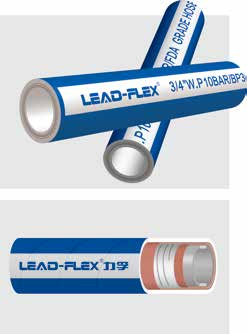
Transferring fatty and oily foods presents massive chemical degradation risks in processing facilities. Dairy products, cooking oils, animal fats, and cosmetics bases actively destroy standard elastomeric materials rapidly. Plant operators face serious daily challenges maintaining these demanding production lines. Using chemically incompatible hoses inevitably leads to elastomer swelling and eventual structural failure. This degradation causes severe product contamination through rubber leaching. It creates noticeable off-flavors in foods and forces highly disruptive line shutdowns. You cannot afford these preventable production stoppages. We will provide an evidence-based framework for specifying the right equipment for lipid transfer. Plant managers, process engineers, and procurement teams will learn exactly how to choose materials correctly. By following this detailed guide, you will ensure rigorous regulatory compliance and secure long-term operational reliability for your processing facility.
Key Takeaways
Material matters: Nitrile (NBR) and Polyurethane (PUR) are the industry standards for fatty foods; standard rubber compounds will fail.
Know the limits of EPDM: While an EPDM food hose is exceptional for aqueous foods, beverages, and CIP chemicals, it degrades rapidly when exposed to animal or vegetable fats.
Compliance is verifiable: A true FDA grade hose requires specific documentation (FDA 21 CFR 177.2600) proving safe extraction limits for fatty substances.
Assembly integrity: The sanitary fittings and crimping methods are just as critical as the hose tube material for preventing bacterial harborage in fatty food processing.
The Business Risk of Incorrect Hose Selection for Fatty Foods
Fatty acids act as aggressively powerful solvents on incompatible rubber compounds. Lipid molecules naturally seek to penetrate non-polar rubber matrices. When they do, they compromise the entire mechanical structure. This reaction happens continuously during operation.
You must understand the progression of hose failure to prevent it. The breakdown rarely happens overnight. Instead, it follows a predictable and destructive timeline. We typically see the following failure mechanisms:
Swelling: The inner tube absorbs fats and expands. This chokes off the internal diameter and restricts fluid flow.
Blistering: Fluid gets trapped beneath the surface layer. The rubber begins bubbling outward.
Particulate Shedding: As the rubber loses structural integrity, microscopic rubber crumbs break off into the product stream.
Inner-tube Delamination: The core tube completely separates from the structural reinforcement layers. This causes catastrophic failure.
You can trace equipment failure directly to severe business outcomes. Contaminated batches lead to highly publicized product recalls. Shedding rubber particles guarantee failed food safety audits. Even minor chemical leaching alters product taste profiles permanently. Furthermore, unexpected ruptures increase unplanned downtime. Facility managers spend hours cleaning spilled oils instead of running production.
To establish true success criteria, an optimal hose must maintain strict dimensional stability. It must exhibit absolutely zero flavor or odor transfer. Finally, it must withstand rigorous sterilization cycles without hardening or cracking.
Evaluating Core Hose Materials for Fats and Oils
Selecting a Food Grade Hose requires an understanding of polymer chemistry. Different elastomers handle fats entirely differently.
NBR (Nitrile Butadiene Rubber) – The Gold Standard
Nitrile serves as the primary choice for vegetable oils, mayonnaise, animal fats, and whole milk. Engineers rely on NBR because it inherently resists lipid absorption. The chemical structure of Nitrile repels fatty acids effectively.
NBR offers a perfect balance of flexibility and temperature resistance. It maintains excellent chemical stability against heavy lipids. You can easily bend NBR hoses around tight brewery corners or dairy processing vats. It remains soft even when transferring cold milk.
Polyurethane (PUR) and Fluoropolymers (PTFE)
We position Polyurethane (PUR) specifically for high-abrasion fatty transfers. If you pump ground meats, pet foods, or fatty dry powders, PUR provides superior wear resistance. It resists tearing far better than standard rubber.
Conversely, we position PTFE for extreme temperature fatty transfers. Hot fryer oils easily exceed 350°F. At these temperatures, standard elastomers melt. PTFE handles the heat perfectly. However, note the necessary trade-off. PTFE remains highly rigid and costs significantly more than rubber alternatives.
The Limitation of the EPDM Food Hose
Procurement teams often make a massive mistake. They treat all food-grade rubber equally. You must apply skeptical evaluation to material selection.
Many facilities mistakenly use an EPDM FOOD HOSE for fats. EPDM remains a staple in breweries and dairies for aqueous transfer. It handles water, beer, and cleaning chemicals beautifully. However, it is chemically incompatible with concentrated fats and oils. Because EPDM is a non-polar polymer, non-polar lipids dissolve it rapidly. The hose will turn gummy, swell, and eventually fail entirely.
Material Performance Chart: Fatty Food Transfer
Material Type
Best Application
Fat Resistance
Flexibility
NBR (Nitrile)
Milk, Veg Oils, Mayo
Excellent
High
PUR (Polyurethane)
Ground Meats, Powders
Good
Medium
PTFE
Hot Fryer Oils
Outstanding
Low
EPDM
Water, Beer (No Fats)
Poor
High
Verifying an FDA Grade Hose: Beyond the Label
You must look through the certification lens. "Food grade" acts merely as a marketing term. True regulatory compliance represents a strict legal standard. Anyone can print "food safe" on a box. Proving it requires extensive laboratory testing.
The FDA outlines specific requirements under FDA 21 CFR 177.2600. This regulation governs rubber articles intended for repeated use. A standard FDA GRADE HOSE must pass rigorous hexane extraction tests. Hexane acts as a chemical stand-in for fat. Laboratories boil the rubber in hexane. They measure exactly how much polymer leaches out. Only materials falling below strict weight limits earn certification for fatty food contact.
You should also look for supporting certifications. These overlapping standards signal premium manufacturing quality.
Global Certification Focus Framework
Standard
Primary Focus
FDA 21 CFR 177.2600
Extraction limits for aqueous and fatty foods.
3-A Sanitary Standards
Hygienic design and cleanability of the assembly.
European Regulation (EC) 1935/2004
Traceability and overall migration limits in Europe.
Phthalate/BPA-Free
Guarantees absence of specific endocrine disruptors.
Implementation Realities: Temperature, Pressure, and Cleaning Protocols
Operational environments dictate hose survival. You must consider complex thermal dynamics. Transferring cold fats requires high hose flexibility. Cold butter or chilled creams make rubber stiff. If you transfer hot oils, you risk melting standard elastomers entirely. You must match the temperature rating to your exact process.
Clean-in-Place (CIP) and Sterilize-in-Place (SIP) introduce massive risks. Alkaline cleaners and high-temperature steam interact aggressively with fat-resistant hoses. NBR resists fats well, but extreme steam can degrade it over time. Facilities often push CIP temperatures too high.
You must manage the risk of thermal shock. When you pump cold milk and immediately follow it with boiling steam, the rubber experiences severe stress. You must allow hoses to cool completely before resuming cold fat transfer. This simple practice prevents micro-cracking in the tube.
Finally, we must emphasize sanitary coupling integration. A premium fat-resistant tube remains completely useless if sanitary fittings create dead legs. Tri-Clamp fittings must sit perfectly flush. If a gap exists between the hose and the fitting, fats coagulate there. These dead legs harbor dangerous bacteria. Proper crimping ensures a smooth, uninterrupted flow path.
Shortlisting and Evaluating FDA Grade Hose Suppliers
Vendor vetting logic requires serious attention. You need to separate tier-one manufacturers from low-cost resellers. Cheap imports often blend low-grade rubbers to cut costs. These blends fail hexane extraction tests instantly.
You must insist on strict traceability requirements. Professional FDA Grade Hose Suppliers provide lot-traceable products. Always ask for these specific documents:
Material Test Reports (MTRs): Proves the chemical makeup of the batch.
Certificates of Conformance: Guarantees the finished assembly meets stated regulations.
Pressure Test Logs: Verifies the crimped assembly will not blow off under load.
Evaluate custom fabrication capabilities closely. Do not just buy bulk hose rolls. You need suppliers who provide factory-crimped, hygienic assemblies. Field-crimped hoses often lack the necessary precision to eliminate internal gaps.
For your next-step actions, recommend requesting a chemical compatibility chart. Ask the supplier for a small sample length. Run in-situ testing using your actual fatty products and CIP chemicals. Validate the performance locally before executing a facility-wide rollout.
Conclusion
We recommend a clear decision matrix for your facility. Always default to NBR or PTFE for fatty foods. You must strictly avoid EPDM for these specific lipid applications. Furthermore, actively demand verifiable FDA documentation from your vendors rather than trusting generic labels. The science dictates these choices clearly.
Investing in the correct, certified hose upfront prevents exponential operational headaches. A cheap hose saves money today but guarantees massive expenses tomorrow. Prevent severe product spoilage, protect your brand reputation, and eliminate compliance failures down the line by making the right material choices today.
FAQ
Q: Can I use a standard water or beverage hose to transfer vegetable oil?
A: No. Non-fat-resistant hoses will absorb the oil, swell, and eventually leach rubber compounds into the food. Standard beverage hoses typically use EPDM, which degrades rapidly upon contact with lipids. Always specify NBR or PTFE for oils.
Q: How long should a fat-transfer food grade hose last?
A: Lifespan depends entirely on operational variables including temperature, flow rate, and CIP frequency. High-heat sanitation degrades rubber over time. Scheduled preventive maintenance and visual inspections are required to determine exactly when replacement is necessary.
Q: Is silicone suitable for fatty foods?
A: Standard silicone is generally not recommended for continuous contact with liquid fats and oils. It can absorb lipids, discolor, and slowly degrade mechanically. NBR or PTFE remain the strongly preferred, durable alternatives for heavy fat processing.